
No products in the cart.
Halloween Gifts
Best Halloween Hoodies to Keep You Warm: A 2026 Buying Guide

08
Sep
Sep
A Halloween hoodie has to do more work than a regular graphic tee — it needs to actually keep you warm on a chilly October night, hold its shape through a season of wear, and still look good enough to wear well past trick-or-treating. Between fleece weights, hood construction, and print methods that all affect how a hoodie ages, there’s more to picking the right one than just liking the graphic on the front. This guide breaks down Halloween hoodies by warmth, fabric, fit, and design, so you know what you’re actually buying before it ships.
Best Halloween Hoodies at a Glance
Compare hoodie weights and warmth
Hoodies generally fall into lightweight, midweight, and heavyweight categories, and the difference matters more for Halloween wear than people expect. A lightweight hoodie works fine layered under a jacket for an early-evening party, while a heavyweight, fleece-lined hoodie can function as the only outer layer on a cold trick-or-treating night. Matching the weight to how you’ll actually wear it avoids ending up with something too thin for the weather or too warm to layer.
In our experience, the weight listed on a product page doesn’t always match the feel in hand — a “midweight” from one brand can run closer to lightweight from another. Reading the fabric composition and any GSM (fabric weight) figure the listing provides is more reliable than the weight label alone.
Best hoodie by goal
If you want maximum warmth for standing outside, a fleece-lined or sherpa-lined pullover is the strongest option. If you need something you can take on and off as temperatures shift through the evening, a zip-up hoodie is more practical than a pullover. And if you’re buying for a group or a couple, a relaxed unisex fit tends to be the easiest to size consistently across different people.
What to check before buying
Before ordering, it’s worth confirming the fabric blend, whether the hood is single- or double-lined, the type of print used on the graphic, and the brand’s specific size chart rather than assuming standard S–XL sizing applies. These details affect warmth and durability more than the design itself does, and they’re the details a product photo alone won’t tell you.
How to Choose a Warm Halloween Hoodie
Match hoodie weight to the weather
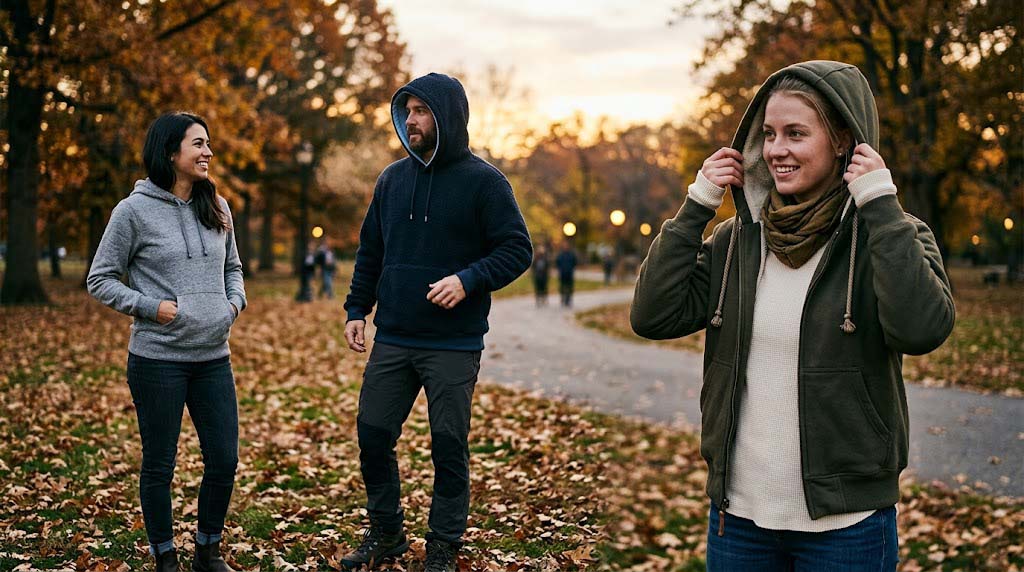
If you’re in a region where October evenings stay mild, a midweight cotton-blend hoodie is usually enough on its own. In colder climates, a heavyweight fleece or sherpa-lined hoodie holds up better as a standalone layer instead of needing a jacket on top, which also means one less thing to carry at a party or while trick-or-treating with kids.
Pullover versus zip-up construction
A pullover hoodie tends to trap more warmth around the chest and neck since there’s no zipper seam letting cold air in, which makes it a better pick for standing outside for extended periods. A zip-up is more practical when temperatures swing over the course of an evening — indoors at a party, then outside for a walk — since it’s faster to take off or half-zip without pulling anything over your head.
Check warmth features before you buy
Beyond the base fabric, details like a double-lined hood, a drawstring that actually cinches, and a ribbed hem that sits snug rather than loose all contribute to how warm a hoodie feels in practice. A hood that’s only a single layer of fabric will flop rather than stand up around your face, which matters more than it sounds like on a windy night.
Best Fabrics for Halloween Hoodies: Fleece, Cotton, and Sherpa
Fleece-lined hoodies
Fleece lining is the most common way brands add warmth to a hoodie without significantly increasing bulk. It’s soft against the skin and traps heat well, though it’s also the material most prone to pilling — small fabric balls forming, especially under the arms — after repeated wear and washing. Choosing a slightly higher-quality fleece blend tends to resist this better than the cheapest option in a listing.
Cotton and cotton-blend hoodies
A cotton or cotton-poly blend hoodie without heavy fleece lining is a better fit for milder fall weather than genuinely cold nights. It breathes better than fleece, which is an advantage if you’ll be moving around a lot — dancing at a party, walking a neighborhood with kids — rather than standing still outside.
Sherpa-lined hoodies
Sherpa lining is the warmest option most Halloween hoodies offer, with a fuzzy interior that traps significantly more heat than standard fleece. It also adds noticeably more bulk and weight, which is worth factoring in if you plan to layer anything underneath it — a sherpa-lined hoodie usually isn’t the one you want to squeeze a long-sleeve base layer under.
Halloween Hoodie Design Styles: Cute, Funny, Spooky, and Gothic
Cute and family-friendly designs
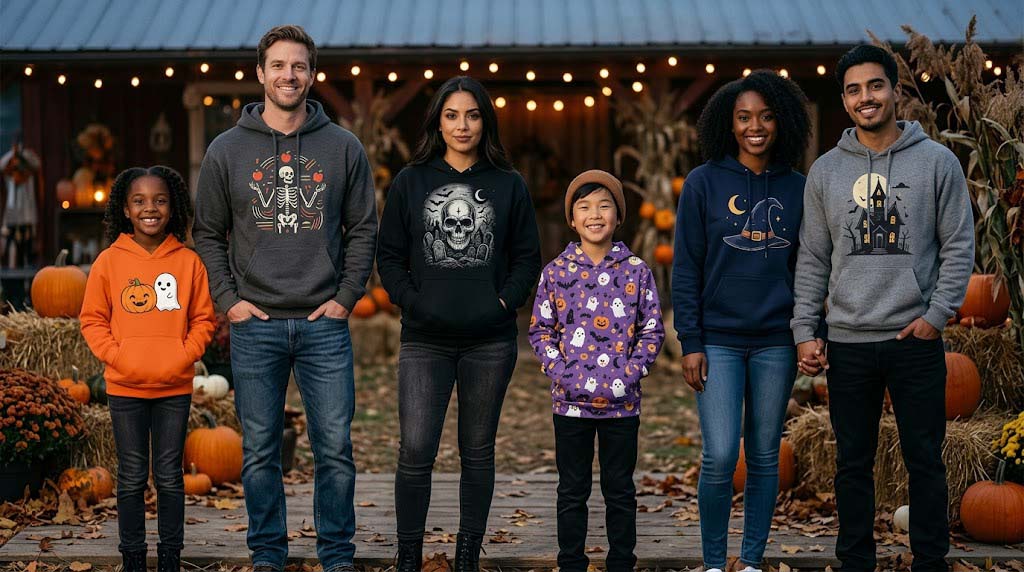
Cute hoodie graphics — smiling pumpkins, friendly ghosts, cartoon black cats — tend to use rounder shapes and brighter colors than other styles, which makes them a natural fit for family outings, school events, and photos with younger kids. A simpler, less trend-specific illustration also tends to hold up better across multiple Halloweens than something tied closely to a current design fad.
Funny and pun-based designs
Text-heavy or pun-based hoodie graphics work well for office parties and casual gatherings where a graphic-heavy or gory design might feel out of place. Because a hoodie’s chest area is smaller and often partly covered by a zipper or drawstring, it’s worth checking that any text-based design is sized to stay legible rather than getting visually cluttered by the garment’s own construction.
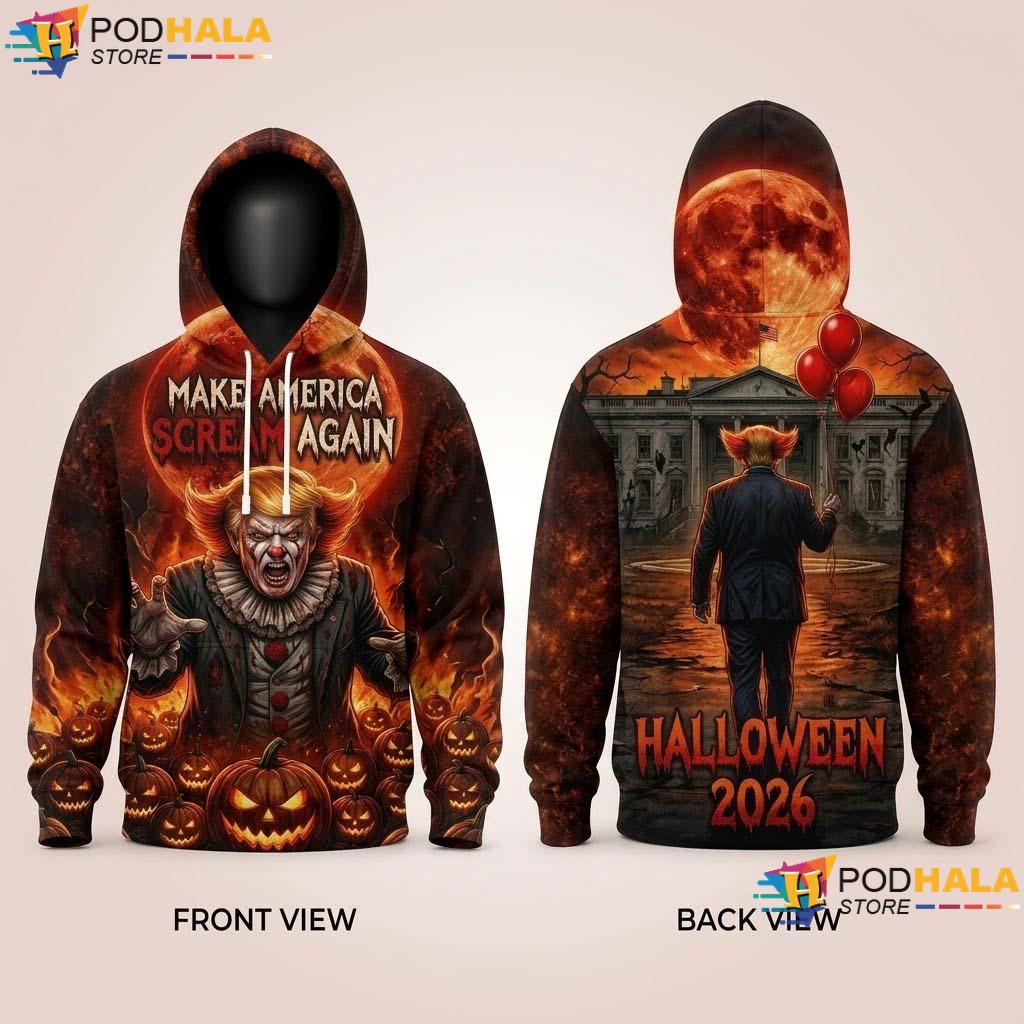
Top Pick: Trump Scream Halloween 3D Hoodie Funny Clown Horror Pumpkin Graphic Top — $39.99. An all-over print design that leans into satirical horror-movie humor, with a full front-and-back graphic and a Unisex Adult fit available from S to 5XL. It’s a good fit if you want a design that gets a reaction rather than one that blends in.
Spooky, gothic, and couples designs
Skulls, gothic typography, and darker illustrated scenes suit a hoodie’s heavier, more casual silhouette better than they might a lightweight t-shirt. This category also overlaps with matching sets — if you’re shopping specifically for a coordinated look with a partner, our couples halloween hoodies guide covers sizing and matching design tips in more depth than a general style breakdown can.
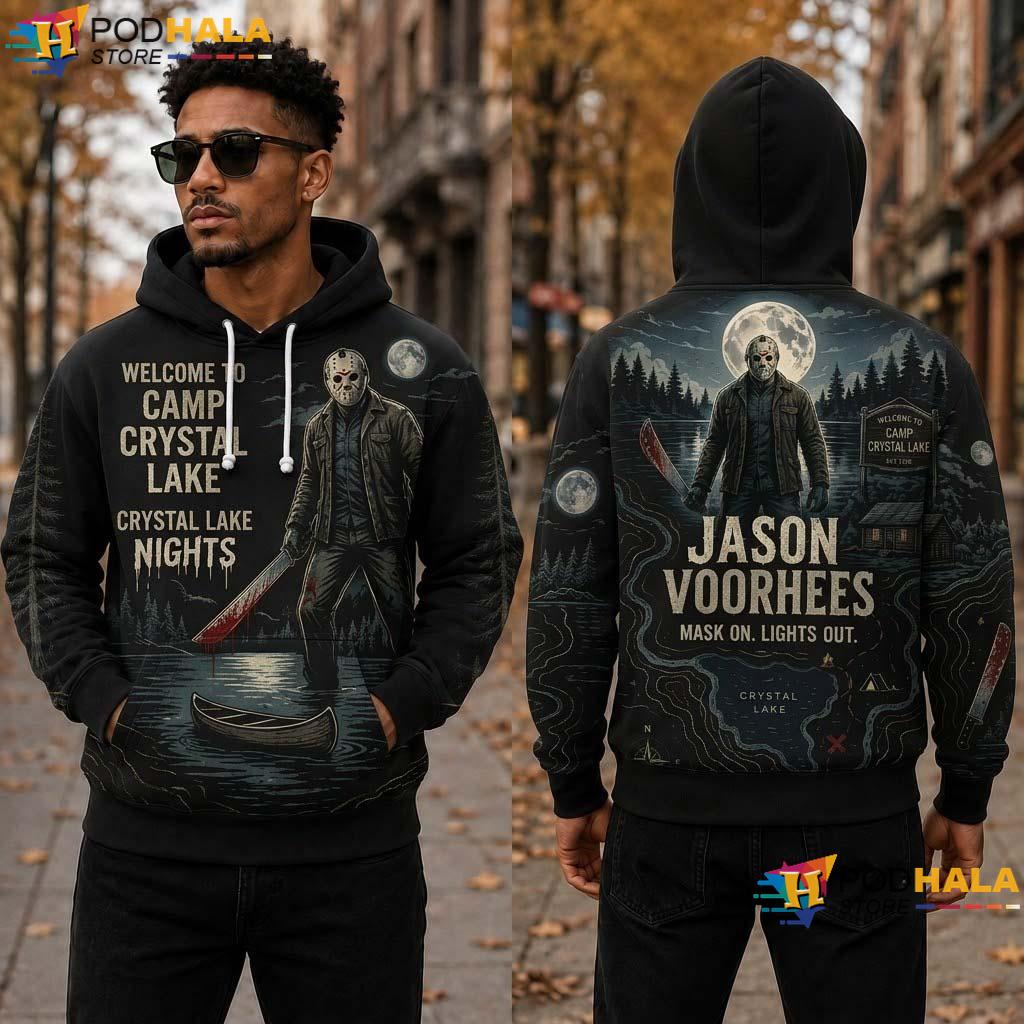
Top Pick: Voorhees Halloween All Over Print Hoodie Friday 13th Crystal Lake Top — $39.99. A moody, all-over horror-movie print with a full front-and-back scene, offered in Unisex Adult and Kid fit types from S to 5XL. This is one of the more atmospheric options here if a dark, cinematic color palette matters to you.
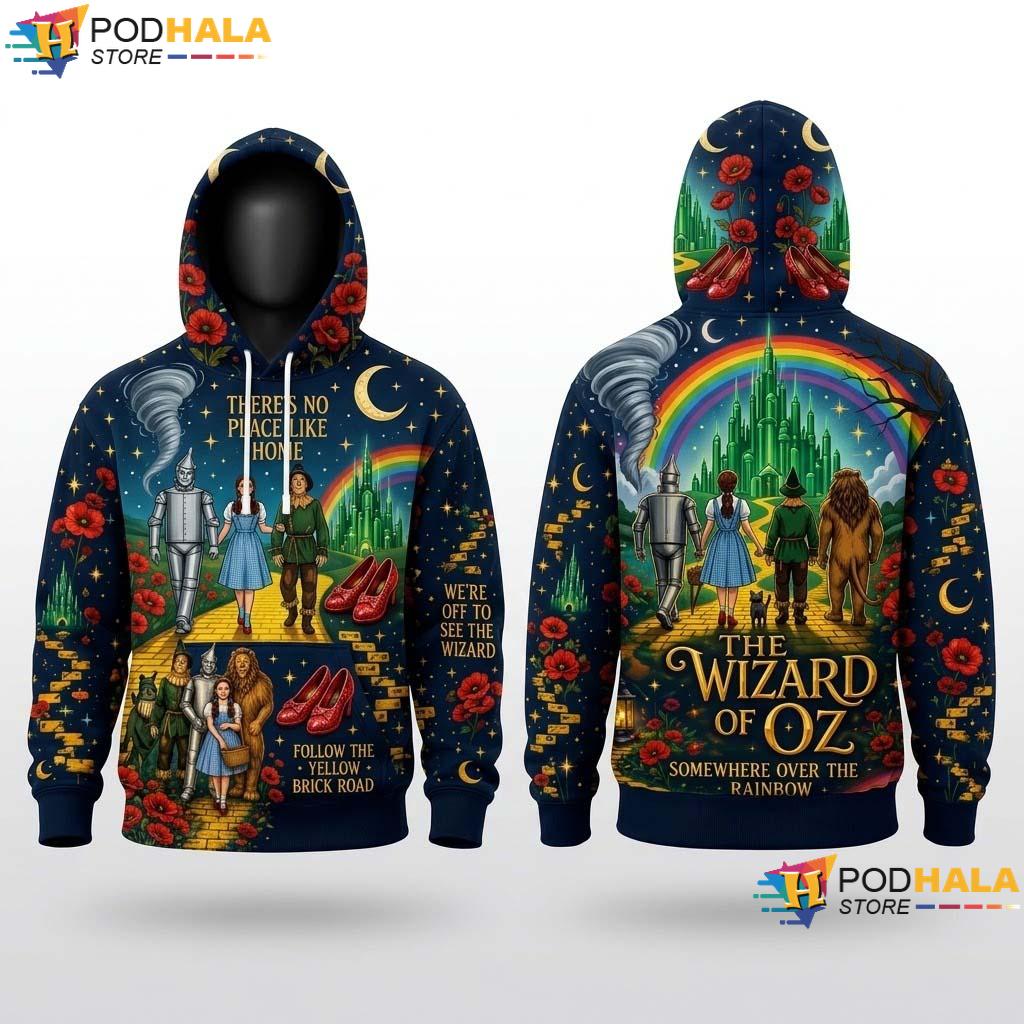
Top Pick: Wizard Oz Halloween All Over Print Hoodie Movie Fan Spooky Season Gift — $39.99. A colorful, movie-inspired all-over print with a front and back design, available in Unisex Adult and Kid sizing. It’s a lighter, more whimsical option within the spooky/gothic category for anyone who wants a Halloween-season design without a strictly dark or horror-heavy look.
Hoodie Fit and Size Guide
Unisex and relaxed fits
Most Halloween hoodies are cut as unisex, which generally means a boxier body and slightly dropped shoulder compared to a fitted, gender-specific cut. This makes unisex sizing easier to coordinate across a group or couple, since the same size label tends to fit a wider range of body types reasonably well.
How true to size hoodies typically run
Hoodie sizing varies more between brands than t-shirt sizing does, partly because fleece and sherpa linings add bulk that isn’t always reflected in the listed measurements. Checking chest width and body length against a size chart — rather than relying on your usual hoodie size from a different brand — is the more reliable approach here.
Deciding whether to size up
Sizing up makes sense if you plan to wear a long-sleeve or thermal layer underneath, or if you specifically want an oversized silhouette. It’s less useful as a default strategy, since an already-relaxed unisex fit sized up further can end up looking shapeless rather than intentionally oversized — checking the brand’s return policy gives you a safety net if the size doesn’t work out either way.
Print Quality and Construction Details
Hood construction: single- versus double-lined
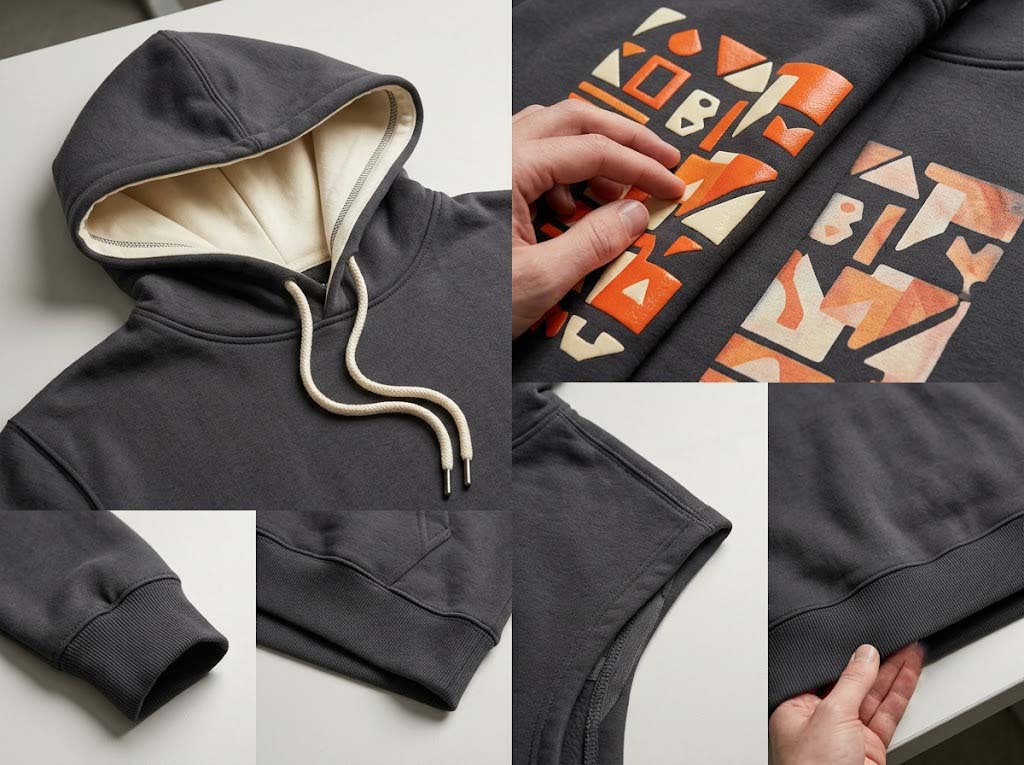
A single-layer hood is lighter but tends to flop rather than hold its shape, which matters if you actually plan to wear the hood up outside. A double-lined hood uses two layers of fabric, which adds a bit of structure and noticeably more warmth around the head and neck — a detail that’s easy to miss in a product photo but obvious the first time you wear the hood up on a cold night.
Print methods on thicker fabric
Screen printing tends to stay vibrant and hold up well on a heavier, textured hoodie fabric, while DTG (direct-to-garment) printing can look slightly less saturated on thick material compared to how it prints on a thinner t-shirt. Neither method is wrong for a hoodie, but if bold, bright color is the priority, it’s worth checking which print method the listing specifies.
Ribbed cuffs and hem
The ribbed cuffs and hem are what keep cold air from creeping in at the wrists and waist, so a hoodie with loose, worn-out ribbing won’t perform as well as one with a snug, well-constructed hem — even if the two hoodies look identical in the design. If a hem feels overly tight and bunches up when you sit down, that’s usually a sign of a lower-quality knit rather than something you have to just live with.
Styling and Caring for a Halloween Hoodie
Layer a hoodie for cold outdoor events
For extended time outside — a long trick-or-treating route, an outdoor party — layering a lighter shirt or thermal underneath a midweight hoodie is usually more comfortable than relying on one heavyweight piece alone, since it gives you more flexibility if the temperature shifts through the evening. If you’re hosting instead of heading out, setting the seasonal tone at the front door with a spooky halloween door mat extends the aesthetic to guests before they even step inside.
Washing without damaging the print or fleece
Turning the hoodie inside out and washing in cold water helps protect both the graphic and the fleece lining. Skipping fabric softener is worth noting specifically — it can leave a residue on fleece that reduces its softness over time and may affect how well certain print adhesives hold up, particularly on heat-transfer designs.
Wearing a Halloween hoodie beyond October
A hoodie with a subtler seasonal motif — a moon, a black cat, a minimal bat outline — tends to transition into general fall and winter wear more easily than one with bold “Halloween” text or a very literal graphic. Pairing it with a denim or flannel overshirt keeps the same casual layered look going well past the holiday itself.
Where to Buy and Compare Halloween Hoodies
Ready-made versus print-on-demand
Ready-made hoodies typically ship faster and give a more predictable result since the product already exists in inventory, while print-on-demand offers more design variety at the cost of longer production time. If you’re browsing our own halloween collection, checking the listed production and shipping window against your event date is worth doing before finalizing an order.
Timing your order around Halloween
It’s worth checking how many days it is until halloween against a seller’s estimated delivery window, especially for anything fleece-lined or made to order, since heavier garments sometimes take longer to produce and ship than a basic t-shirt.
Reading reviews for fit and fabric feedback
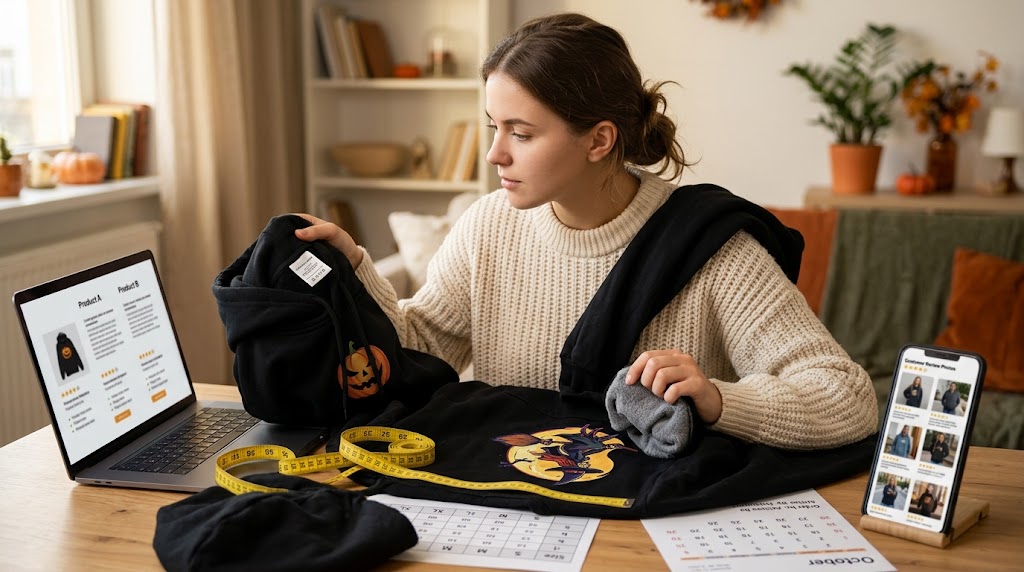
Reviews that mention specific fit and fabric details — whether the hood sits well, whether the fleece pills quickly, whether true-to-size claims held up — are more useful than a star rating alone. Photos in reviews are also one of the more reliable ways to judge actual garment color, since screen displays can render the same shade differently.
Frequently Asked Questions
Why does my new fleece hoodie shed fuzz everywhere the first time I wear it?
Shedding loose fuzz is common with new fleece-lined garments and is left over from the manufacturing process. We’ve found that washing the hoodie inside out once or twice before wearing it usually clears up most of the shedding.
Is DTG printing better than screen printing for a thick hoodie?
Not necessarily — DTG can look slightly less vibrant on thicker fabric than it does on a lighter t-shirt, while screen printing tends to hold bold color better on heavier material. Neither method is universally superior; it depends on how bright and saturated you want the graphic to look.
What should I do if the ribbed hem of my hoodie feels too tight?
A tight hem that bunches up when you sit can sometimes be gently stretched while the fabric is still damp from washing, then air-dried in that stretched position. We’ve found this loosens a too-snug hem noticeably, though it won’t fully fix a poorly made one.
Will a fleece-lined hoodie keep me warm enough for outdoor trick-or-treating?
A heavyweight, fleece- or sherpa-lined hoodie is generally warm enough on its own for most fall evenings, though very cold or windy conditions may still call for a jacket layered on top. Checking the specific lining type and weight is more useful than assuming any hoodie labeled “warm” performs the same.
Can I wear a Halloween hoodie casually after October?
Yes, especially if the design leans toward a subtle autumn motif rather than an explicit Halloween graphic. A neutral-colored hoodie with a small, seasonal icon works as a regular fall or winter layering piece well beyond the holiday.
How do I keep a heat-transfer print from cracking on a hoodie I wear often?
Washing inside out in cold water, avoiding high heat in the dryer, and skipping fabric softener all help preserve a heat-transfer print over repeated wear. Ironing directly over a printed graphic is one of the more common ways this type of print gets damaged.