
No products in the cart.

Christmas Gifts
Christmas Day Traditions in the USA: Customs, Food & Family Rituals
20
Oct
Oct
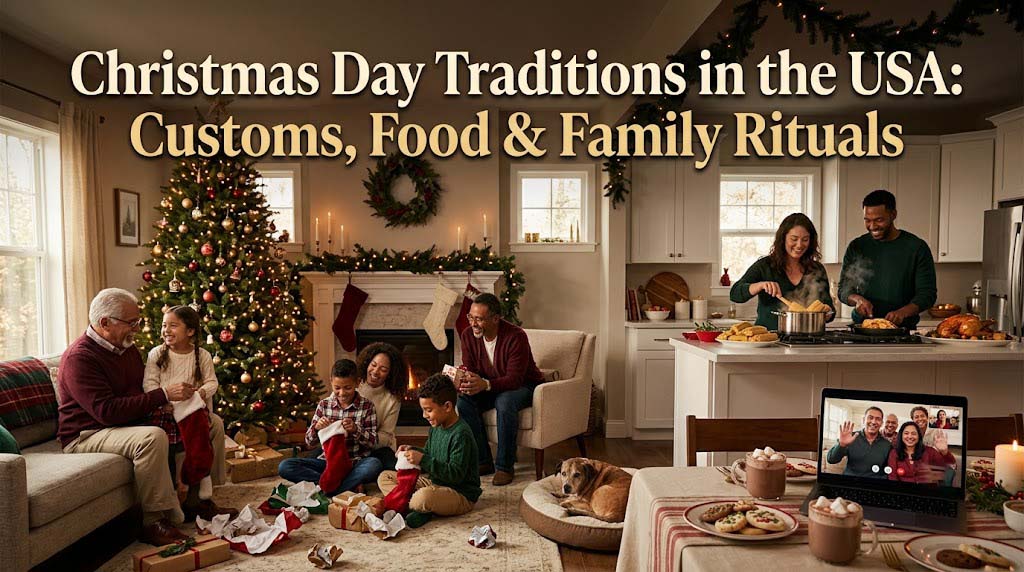
Christmas day traditions in the usa are a varied mix of religious, family, regional and personal customs, not one fixed routine. Some households center the day on worship, others on family or cultural activities, and many combine both. Most gather, share a meal, exchange gifts and spend part of the day resting, but the order and meaning of those pieces differ widely.
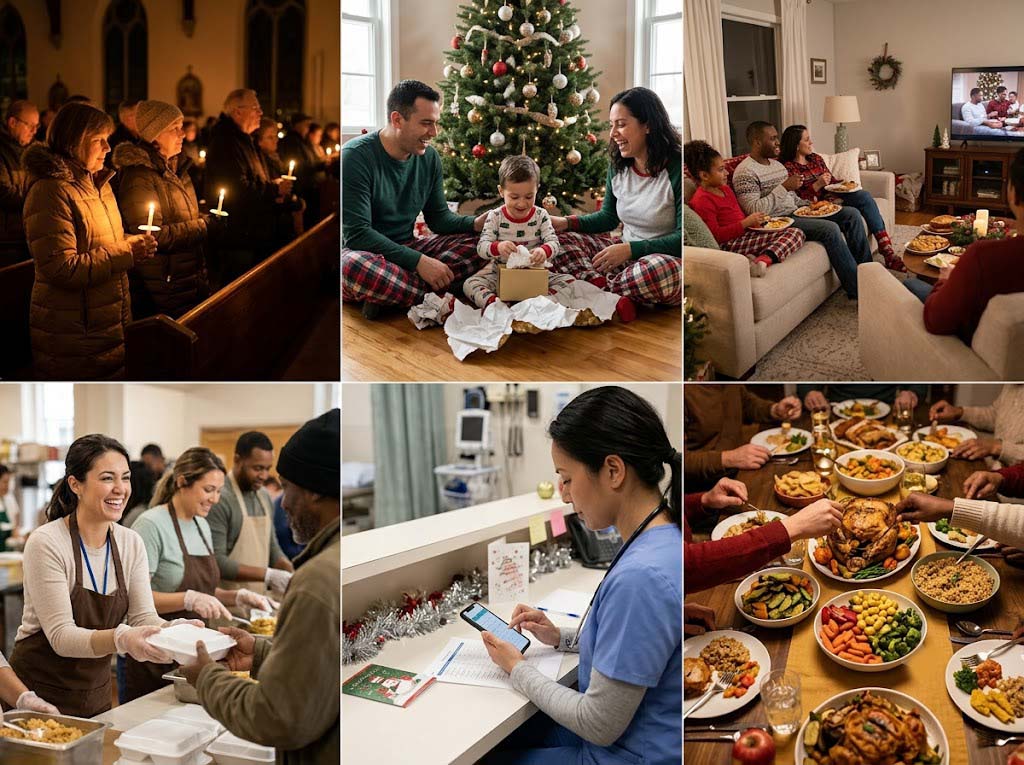
This guide follows the day from Christmas Eve to evening and then looks at food, gifts, decorations, faith, regional variation and ways to start a ritual of your own. Terms like “common” and “many households” are used on purpose, because no single routine describes every family. In 2026, Christmas Day falls on a Friday, so many people will have a long weekend to work with.
| Part of the day | Common examples | Flexible alternatives |
|---|---|---|
| Christmas Eve | Family meal, church service, baking | Video call, smaller gathering |
| Christmas morning | Stockings, gifts, breakfast, photos | Staggered gift opening |
| Afternoon and evening | Dinner, games, visits, movies | Walk, quiet time, calls |
How Christmas Traditions Developed in America
How Customs Entered and Evolved
American Christmas customs came from many communities, including German, Dutch, British, Irish and Latin American traditions. Each group brought its own foods, songs and decorations, and these blended over time. For the date’s origins, see the explainer on why is christmas on december 25th.
Observance was uneven in early American history, and some communities did not celebrate the day at all. Christmas became more widely established as a family-centered holiday during the nineteenth century.
Faith and Family Layers
Christmas in the United States has religious and cultural sides that overlap but are not the same. Some households center the day on worship, while others focus on family, meals and gifts.
Both approaches are common, and many families combine them in their own proportions.
The Role of Media and Retail
Music, films, school events, advertising and shopping seasons helped spread shared images of the holiday. It is difficult to say exactly how much each influenced family habits, so this is best described as a general influence.
What matters for readers is that many “traditional” scenes are partly inherited and partly shaped by popular culture.
A Typical Christmas Eve, Morning and Day in American Households
Christmas Eve: Preparing and Gathering
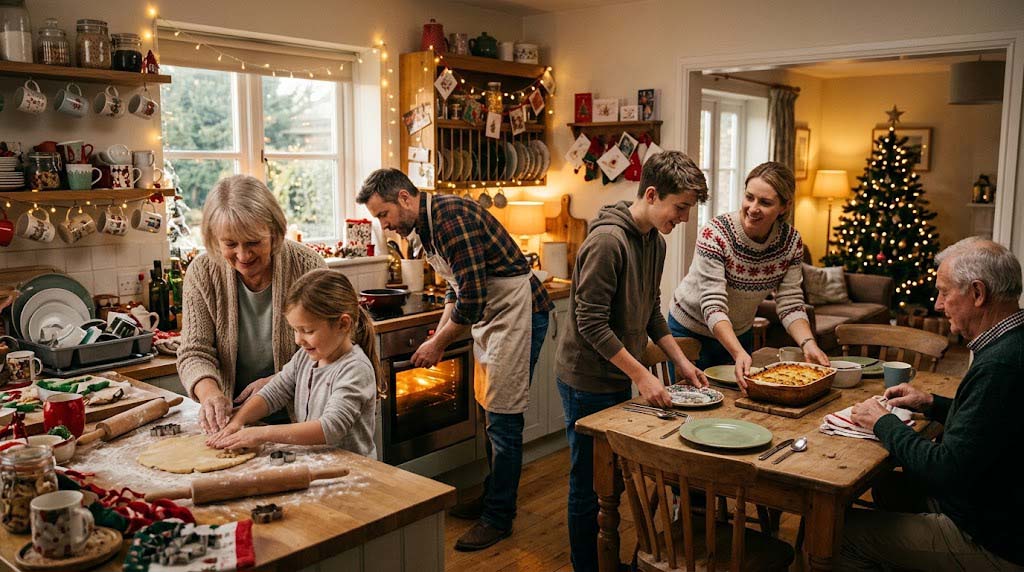
Many households use the evening for a family meal, a church service, baking or setting out gifts. Some families open one present on Christmas Eve to ease the wait.
In 2026, Christmas Eve falls on a Thursday, so evening plans may need to fit around work and school.
Christmas Morning: Stockings, Gifts, Breakfast and Photos
Children often wake early to find filled stockings and presents, while adults start the coffee and a make-ahead breakfast. Many families pause for a photo before or after the gifts.
Coordinated sleepwear is one option some families choose for that photo. Families who want a shared look without hunting for identical sizes can browse matching family pajamas and choose styles that suit each age.
A few practical points help: check sizes for growing children, choose fabrics that suit the temperature of the house, and confirm exchange options. Anyone who dislikes identical outfits can simply match on color.
Afternoon, Evening and Flexible Schedules
After gifts, many households have a large meal, play games, take a walk or watch a movie. Others visit relatives or call those who live far away.
Schedules change with shift work, travel, blended families and young children. A flexible plan, such as two shorter gatherings instead of one long one, keeps the day relaxed.
Popular Christmas Day Foods and Family Meals
Breakfast and Brunch Patterns
Morning meals are often simple and prepared ahead: baked egg dishes, cinnamon rolls, pastries or pancakes. Make-ahead food keeps the host out of the kitchen while gifts are opened.
Warm drinks such as coffee, tea or cocoa usually come with it, and some households keep the same menu every year as part of the ritual.
Christmas Dinner and Regional Variation
Menus vary by household. Some serve turkey, ham or roast beef, while others serve seafood, tamales or dishes tied to family heritage.
Some Italian American families observe a Christmas Eve seafood tradition, often associated with the Feast of the Seven Fishes, while some Southern families serve ham alongside regional side dishes. These are examples from particular families and communities, not rules for a whole group or region.
Desserts, Drinks and Dietary Needs
Cookies, pies, cakes and seasonal drinks fill out the table, and recipes are often passed between generations. Many cooks keep one family dish that appears every year.
Asking guests about allergies and dietary choices ahead of time lets everyone share the meal comfortably.
Gift-Giving, Stockings and More Sustainable Exchanges
How Families Organize Gifts
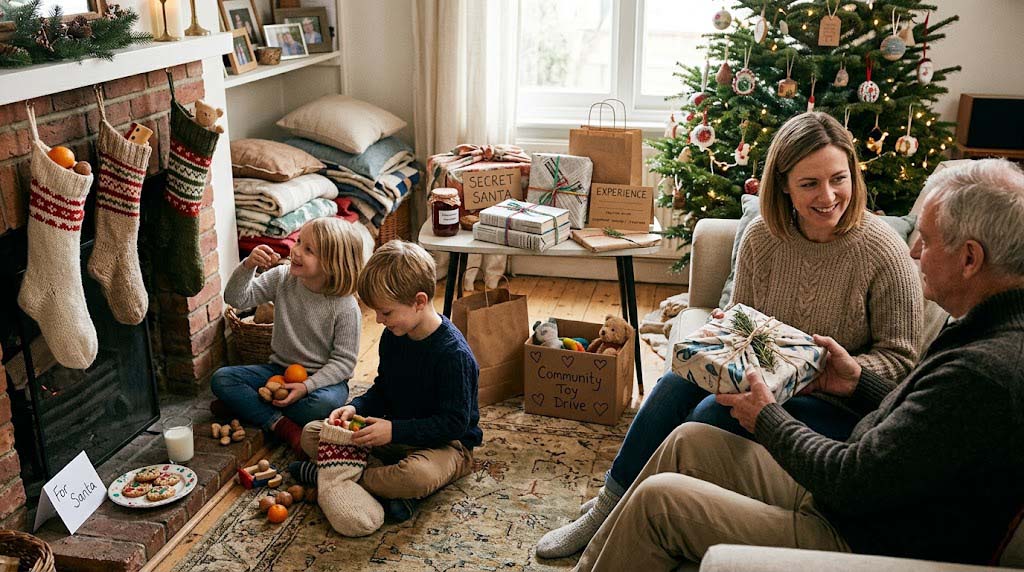
Some families give gifts to everyone, others draw names for a Secret Santa, and others focus on children. Stockings usually hold small items, treats or practical surprises opened before the main gifts.
Many households also leave out cookies and milk for Santa Claus, a ritual that mainly involves younger children.
Lower-Pressure Giving
Some families set a shared budget, buy secondhand, give experiences or make gifts by hand. Others donate to a cause in place of presents.
These choices reduce spending and clutter without removing the meaning of the exchange, and each family can pick the method that suits its situation.
Trees, Decorations, Lights and Music
Decorating the Tree and Home
Many families set up a tree and hang inherited or handmade ornaments, often with a story attached to each. Others prefer a small tree, a wreath or no tree at all.
Timing varies too, from right after Thanksgiving to the weeks closer to Christmas, and none of these is the correct choice.
Lights, Music and Storytelling
Outdoor lights and window displays mark the season for the whole household. Driving through a neighborhood to see them is a low-cost outing for many families.
Carols, playlists, films and read-aloud books add atmosphere, and tastes differ widely, so most households settle on their own favorites.
Religious, Secular and Community Ways to Observe Christmas
Worship and Spiritual Observance
For many Christian households, the day includes a service, prayer or readings. Candlelight services on Christmas Eve are common in many congregations.
Practices differ by denomination and community, so this is one pattern among several.
Secular Family and Neighborhood Customs
Many people observe Christmas culturally rather than religiously, with meals, gifts, lights and time together. Some non-Christian families also use the day for rest, a movie or a family meal out.
Describing these as valid ways to spend the day keeps the focus on connection and not on a single definition of the holiday.
Giving and Service
Many communities organize volunteering, food drives and donation efforts during the season, and some families make them part of Christmas Day itself. Serving a meal or delivering gifts can become a yearly habit.
Community giving also gives children a concrete way to see generosity in action.
Regional and Multicultural Variations in the USA
How Place Shapes the Celebration
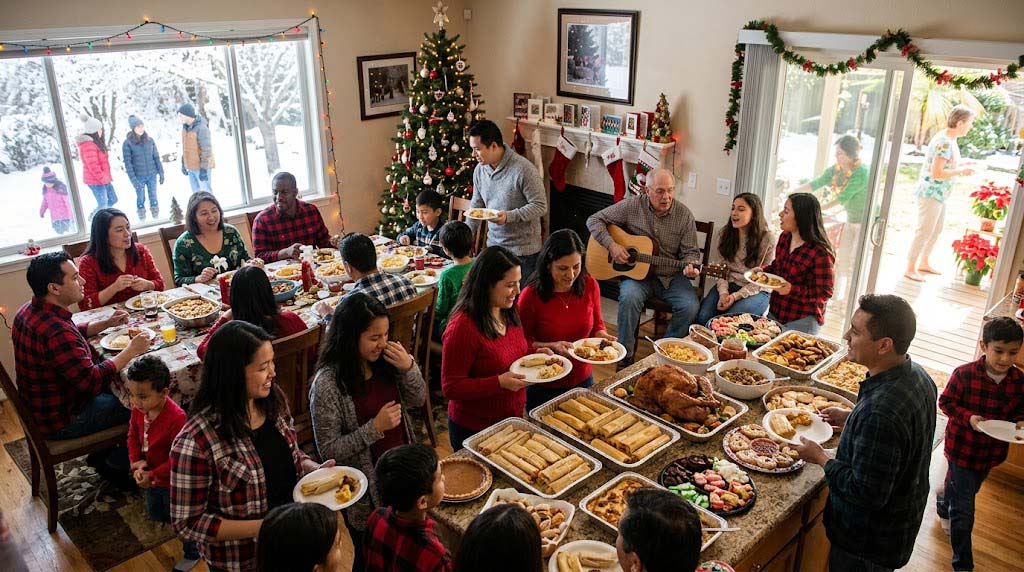
Climate and geography influence the day. Snow and indoor gatherings are typical in colder states, while warmer regions may include outdoor meals, beach visits or neighborhood events.
Some local expressions illustrate this, such as the “Mele Kalikimaka” greeting associated with Hawaii and the farolitos that line streets in parts of New Mexico. They are examples of local custom, not statewide rules.
Multicultural Households
Families with several heritages often combine languages, foods, music and calendars in one celebration. A table might hold a roast alongside tamales or a regional dessert, and prayers or songs may be shared in more than one language.
Splitting the day between two sets of relatives, or alternating hosts each year, helps households with different expectations.
New Customs from Each Generation
Families keep what feels meaningful and add what fits their lives. A grandparent’s recipe can sit beside a new game or a video call with relatives overseas.
That blend is a large reason the American Christmas looks so different from one home to the next.
How to Start or Adapt One Tradition in 2026
Choose One Repeatable Ritual
Lasting traditions tend to be small, affordable and easy to repeat. Choose one that fits the household’s schedule, energy and budget, and that means something to the people involved.
Starting with one idea is easier to keep than a long checklist, and it leaves room for rest.
Keep Participation Flexible
Make roles optional, offer different food choices and include a way to join remotely. People who work holidays or live far away can still take part by phone or video.
No one should feel pressured to attend every activity, give gifts or wear matching clothes.
Record It and Let It Evolve
A yearly photo, a written recipe or a note in a family album keeps the tradition visible. Some families pair the photo with family christmas outfits so each year’s picture looks distinct while staying consistent.
Traditions should change as children grow and households shift. Treat the ritual as something to enjoy, not an obligation.
Christmas Day Traditions FAQ
Is Christmas Eve or Christmas Day more important in the United States?
It depends on the household. Some families treat Christmas Eve as the main gathering, with a special meal or service, while others focus on Christmas Day. Many mark both in different ways.
How can a nonreligious family celebrate Christmas Day?
Many families keep the cultural parts of the day, such as a shared meal, a gift exchange, lights and time together. Others add volunteering or a simple outing so the day still feels meaningful.
Do all American families open gifts on Christmas morning?
No. Some open gifts on Christmas Eve, some on a different day to fit travel or work, and some exchange only small gifts. Each household sets its own schedule.
Is Christmas Day a day off for everyone in the US?
Christmas Day is a federal holiday, but private employers, schools and many service workers follow their own schedules. People in healthcare, retail, travel and public safety often work on the day.
How can hosts plan a Christmas meal for guests with different dietary needs?
Ask about allergies and dietary choices ahead of time, then include at least one main or side dish that works for most guests. Labeling dishes helps everyone choose with confidence.
What is a simple way to start a new family tradition?
Pick one low-cost activity, such as a walk, a baking session or a favorite film, and repeat it for a few years. Take a photo each time so the tradition grows into a record of memories.