
No products in the cart.

Halloween Gifts
The Ultimate Guide to Hanging Halloween Decorations Safely
19
Sep
Sep
Most Halloween decor disasters don’t happen on October 31st — they happen the week before, when a decoration that looked fine going up ends up on the ground after one windy night, or a removable hook takes a chunk of paint with it. If you’re checking how many days is it halloween and starting to plan your setup, the right hanging method depends on three things: how much the piece weighs, what surface it’s going on, and how much weather it needs to survive. This guide to hanging Halloween decorations walks through both, room by room and surface by surface, so nothing falls, tears, or takes your security deposit with it.
The Golden Rules of Hanging Halloween Decor
The weight-surface-weather test
Before reaching for any hook or tape, run through three quick questions: how heavy is the piece, what surface is it going on, and will it face real weather or stay protected? Light decor indoors can use almost any adhesive or hook. Heavy decor outdoors needs mechanical hardware — clips, anchors, or zip ties — not adhesive alone, since adhesive bonds weaken with temperature swings and moisture in a way most people don’t expect until something falls.
Why “damage-free” doesn’t always mean weatherproof
Standard removable hooks are rated for indoor conditions, and that rating doesn’t automatically transfer outside. Cold nights and humid mornings both reduce adhesive grip, so a hook that held a pumpkin garland fine in September can let go entirely by mid-October. If you’re using adhesive hardware outdoors, look specifically for a product rated for outdoor or temperature-variable use rather than assuming “removable” and “outdoor-safe” mean the same thing.
Know when not to do it yourself
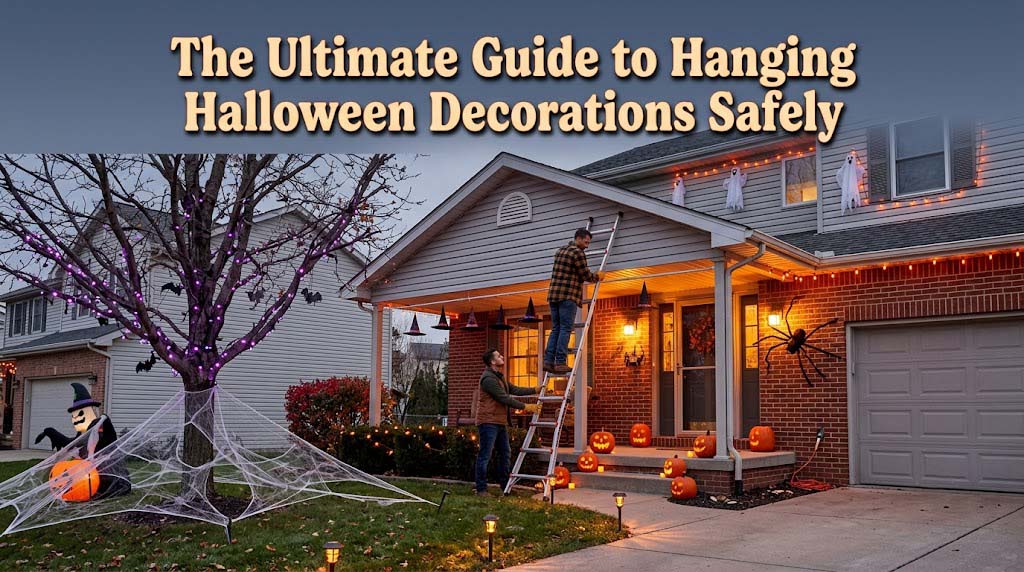
Anything on the roofline, near power lines, or requiring a ladder taller than you’re comfortable with is worth handing off rather than pushing through. No decoration is worth a fall, and a professional installer or a taller family member with the right ladder is a better trade than saving twenty minutes.
How to Hang Indoor Decor Without Damaging Walls
Drywall and ceilings: the “floating” illusion
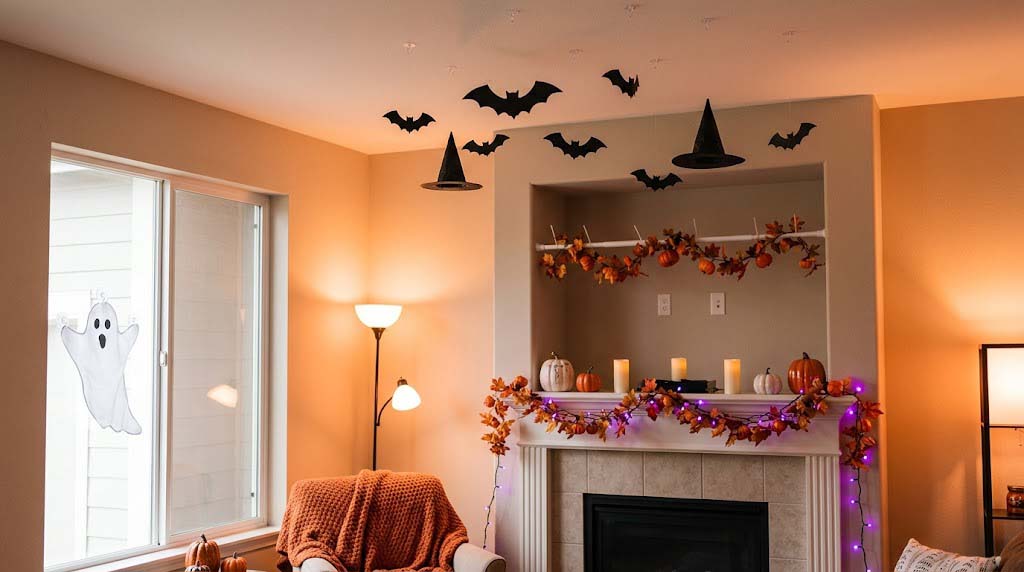
One of the more effective indoor tricks is using clear fishing line strung from a small ceiling hook or a thumbtack to create the appearance of a floating candle, hat, or bat with no visible support. It reads as far more polished than the same prop simply taped or glued in place, and clear line is nearly invisible from a few feet away. Skip foam adhesive strips on ceilings specifically — they’re more likely to leave a mark or drop the item than a discreet hook rated for the ceiling material.
Windows and glass doors: making suction cups actually stick
Suction cups fail more often in cold weather than people expect, since the seal depends on a bit of moisture and warmth that a chilly window doesn’t provide. Wiping the glass with rubbing alcohol first, then adding a thin film of petroleum jelly around the rim of the cup, creates a more airtight seal that holds through cooler nights far better than pressing a dry cup onto cold glass.
Mantels and stair railings: zip ties and tension rods
For garlands, lights, or fabric draped along a railing or mantel edge, clear zip ties or a spring-loaded tension rod secure things without a single nail. This also happens to be the most renter-friendly option in the house — nothing punctures the wall or trim, and everything comes down cleanly at the end of the season.
How to Hang Outdoor Decor on Your House Exterior
Brick and stucco: brick clips and the hot glue trick
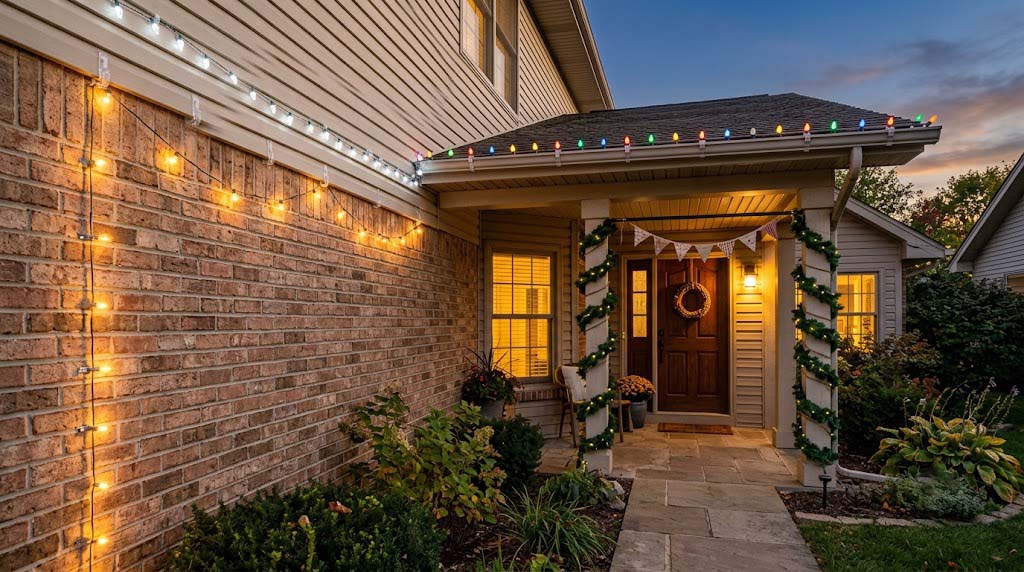
For anything with real weight, a brick clip that grips the mortar line between bricks holds far more securely than adhesive and doesn’t require drilling into masonry. For lighter pieces — paper spiderwebs, small plastic bats — a hot glue gun aimed directly at the brick surface works surprisingly well: brick dissipates heat quickly, the glue sets fast and holds firmly, and it peels off in clean pieces after the season without leaving a mark, which is not something most people expect from hot glue on a hard surface.
Vinyl siding and gutters: no-drill hooks
Siding hooks are designed to slide into the seam between siding panels, and gutter clips hook directly over a gutter’s lip — both hold string lights and lightweight props without a single screw. Drilling through vinyl siding specifically is worth avoiding altogether, since any puncture gives rainwater a path behind the panel and into the wall, a problem that’s far more expensive than a Halloween decoration falling down.
Porch ceilings and pillars
A wooden porch ceiling generally accepts a simple screw-in cup hook without needing a power tool, while pillars and columns hold garlands and lights well when wrapped with rope or oversized zip ties rather than anything that requires piercing the material. If you’re building props from scratch rather than buying them, our homemade diy spooky outdoor halloween decorations guide covers construction details that pair naturally with these mounting methods.
Securing Yard Decor Against Wind and Rain
Heavy props and inflatables: upgrading your anchors
The thin plastic stakes that ship with most inflatables and yard props are usually the first thing to fail in real wind. Swapping them for steel tent stakes, or adding sandbags at the base for anything freestanding, keeps larger pieces from tipping or sailing across the yard during a gusty night.
Trees and fences: hanging safely without harming them
For hanging figures or props from a tree branch, bungee cord or vinyl-coated landscape wire looped loosely does the job without cutting into bark the way bare wire can if left up for weeks. Fences hold up well to the same approach — the goal is enough tension to keep the piece steady without cinching down hard enough to damage the material underneath.
Electrical Safety and Working at Height
Weatherproofing electrical connections
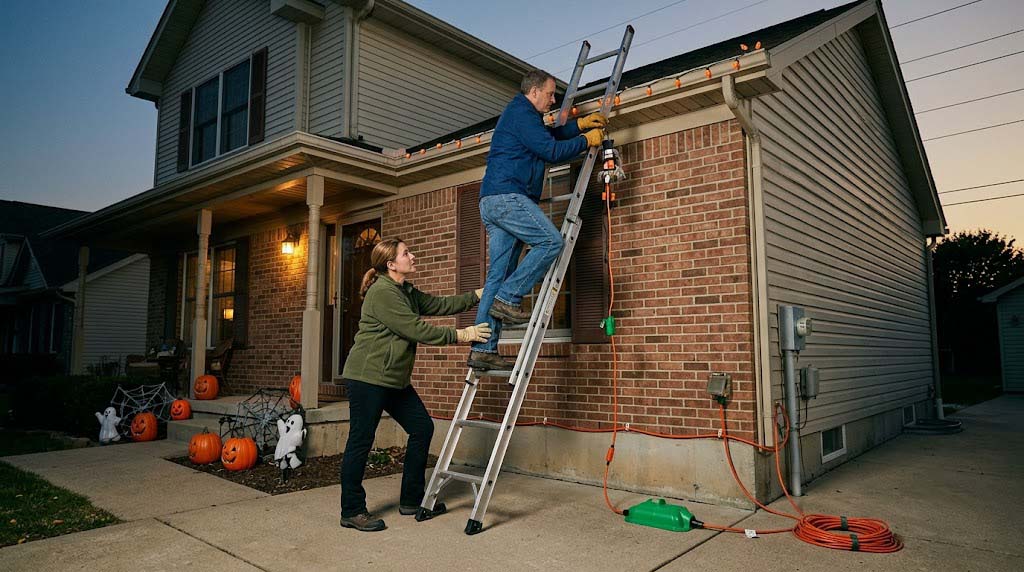
Any extension cord used outdoors should be rated for outdoor use specifically — indoor-rated cords aren’t built to handle moisture and will degrade faster than expected. Wrapping each connection point in a weatherproof cord cover, or at minimum a sandwich bag secured with electrical tape, keeps water from pooling directly on a live connection during rain.
Working safely at heights
A simple rule for ladder placement: for every four feet of height, the base should sit one foot away from the wall. Having someone hold the ladder’s base whenever you’re reaching toward the roofline reduces the most common cause of ladder accidents — the base sliding out from under a stretch that goes a little too far.
Testing, Maintaining, and Storing Your Setup
Do a pre-event check before guests arrive
A quick tug test on each hanging point — gentle, not aggressive — catches loose hooks and fraying ties before they fail in front of trick-or-treaters. It’s also worth checking that nothing blocks a walkway, a door swing, or a house number that emergency responders might need to see.
Recheck after weather and before storing
After any significant wind or rain, a second pass to check hooks, ties, and anchors is worth the five minutes it takes — hardware that held fine in calm weather sometimes loosens after one rough night. When the season ends, sorting hooks, clips, and cords by type as they come down makes next year’s setup considerably faster, and once everything’s packed away, it’s a good moment to pick out something lighter for the rest of the season, like funny halloween shirts for the family instead of another round of yard props.
Frequently Asked Questions
How do I remove stubborn adhesive residue from a wall after Halloween?
Warm the residue for about 30 seconds with a hair dryer to soften it, then work a strand of dental floss under the edge and gently saw it loose. A little rubbing alcohol or a commercial adhesive remover cleans up whatever’s left without needing to scrub the paint.
Will duct tape ruin my paint if I use it to hang decorations?
In most cases, yes — duct tape’s adhesive is strong enough to pull paint off with it, especially after sitting in direct sun for a few weeks. Painter’s tape is a much safer choice for anything temporary, since it’s designed to release cleanly.
What’s the safest way to hang something heavy, like a giant spider prop?
Spread the weight across multiple anchor points rather than relying on a single line — anchoring the front to the roofline, the back legs to a fence or tree, and using paracord rather than thin string distributes the load and makes the whole thing far more stable in wind.
Can I use regular indoor Command hooks outside if I bring them in every night?
It’s better to use hooks specifically rated for outdoor or variable-temperature conditions, since even brief outdoor exposure can affect how well an indoor-rated adhesive holds the next time you use it. If a project is going up and down daily, a mechanical clip or hook that doesn’t rely on adhesive at all avoids this problem entirely.
How do I know if it’s time to take decorations down before a storm?
Anything lightweight, electrical, or with a lot of surface area to catch wind should come down once a storm watch or high-wind advisory is issued for your area — waiting until the wind actually picks up is usually too late to safely climb a ladder or work outside. Heavier, well-anchored pieces can typically stay up through moderate weather.
Is it safe to hang decorations near my home’s gutters or downspouts?
Gutter clips designed for holiday lighting are generally fine for lightweight decor, but it’s worth avoiding anything heavy enough to bend the gutter or block water flow during a rainstorm. Checking that nothing is resting directly inside the gutter channel itself prevents clogs that cause bigger problems than a fallen decoration.