
No products in the cart.

Halloween Gifts
Creepy Halloween Suncatchers for Window Decor: A 2026 Buying Guide

13
Sep
Sep
A Halloween suncatcher earns its spot on the window by doing something no flat decal or poster can — throwing color and shadow across the room the moment sunlight hits it. But that effect depends entirely on what the piece is actually made of, how it’s sized for your window, and how it’s hung, since a suncatcher that looks striking in a product photo can end up disappointing — or falling — once it’s actually installed. This guide breaks down Halloween suncatchers by material, size, placement, and care, so you know what you’re buying before it ships.
The Best Halloween Suncatchers at a Glance
Compare the main suncatcher types
Suncatchers generally split into a few categories: genuine stained glass panels, printed acrylic pieces, and smaller prism or bead-style hangers. A surprising number of listings labeled “stained glass” are actually printed acrylic rather than individual colored glass sections joined with lead or copper foil — weight is one of the more reliable ways to tell them apart, since genuine glass is noticeably heavier for its size, along with raised seam lines between color sections rather than a flat printed surface.
Neither material is automatically the better choice. Acrylic is lighter, generally less expensive, and far less likely to shatter if a hanging setup fails, which makes it a practical option around kids or pets. Genuine stained glass casts richer, more saturated color and holds up better against fading in direct sun, but comes with more responsibility around safe hanging and handling.
Best suncatcher by room and mood
A bedroom or reading nook generally suits a smaller, subtler piece — a single bat or moon design rather than something large and dark that blocks a meaningful amount of light. A living room or entryway window facing the street can handle a bolder, larger gothic or witchy design meant to be seen from outside as much as admired from within.
What to check before buying
Before ordering, it’s worth confirming the actual material, the listed dimensions, the hanging method included (or not included), and whether the piece is rated for indoor use only. These details affect both how the suncatcher performs in sunlight and how safely it stays on the glass, which matters more here than with most other window decor. If you’re browsing our own halloween collection, comparing a few listings side by side on these points before adding anything to your cart tends to save more return hassle than it costs in extra time.
How to Choose a Halloween Suncatcher for Your Room
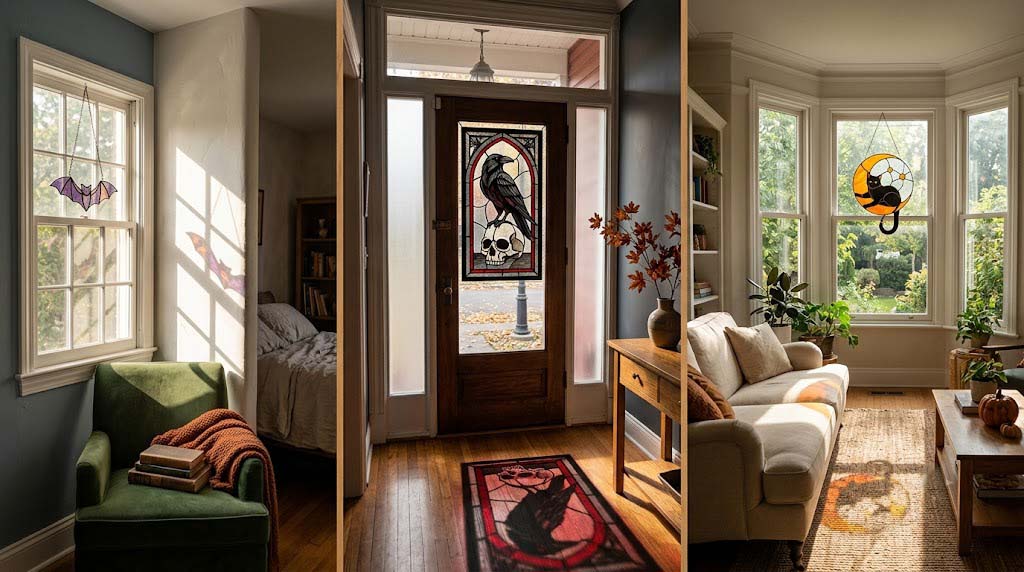
Match the design to your window’s light exposure
A suncatcher only does its job where it actually gets direct sun for at least part of the day — a north-facing window with little direct light will make even a beautifully colored piece look mostly flat and dull. Checking which direction a window faces before buying is a simple step that avoids the most common source of disappointment with this category.
Choose a design tone for the space
Gothic and creepy motifs — ravens, skulls, spiderwebs — tend to suit a home office, entryway, or a room where you want a striking silhouette against the light. Witchy and celestial designs — moons, cats, stars — read as a bit softer and work well in more everyday spaces like a kitchen or living room window.
Consider how it looks with the lights off
Most suncatchers are designed entirely around daylight, so it’s worth remembering that the effect disappears once the sun goes down or on an overcast day. If you’re mapping out your how many days is it halloween countdown and shopping for other decor at the same time, keep in mind that a suncatcher won’t add much to a nighttime display the way lighting or silhouettes do — pairing it with a design that also holds up as a simple silhouette in low light tends to be more satisfying than one that depends entirely on strong, direct sun.
Sizing a Suncatcher for Your Window
Measure the glass before you shop
It’s easy to underestimate or overestimate a window’s actual usable glass area, especially with a window that has a divided-light grid or a deep frame. Measuring the clear glass space — not just the outer frame — before buying avoids ending up with a suncatcher that’s awkwardly oversized or lost in too much empty space around it.
Choosing scale for small versus large windows
A small window or narrow pane generally suits a compact, single-motif design rather than a large panel that would overwhelm the space or block most of the light. A larger picture window has more room for a bigger, more detailed scene, though it’s still worth leaving some visible glass around the edges rather than covering the entire pane.
Weight considerations for bigger pieces
Larger and heavier suncatchers — particularly genuine stained glass — need a hanging method rated for their actual weight, not just whatever came in the box. This is worth factoring into the size decision itself, since a piece that’s technically the right visual scale can still be impractical to hang safely if it’s heavier than your window setup can support.
Buying Guide: Hanging and Care
Why suction cups fail more often than people expect
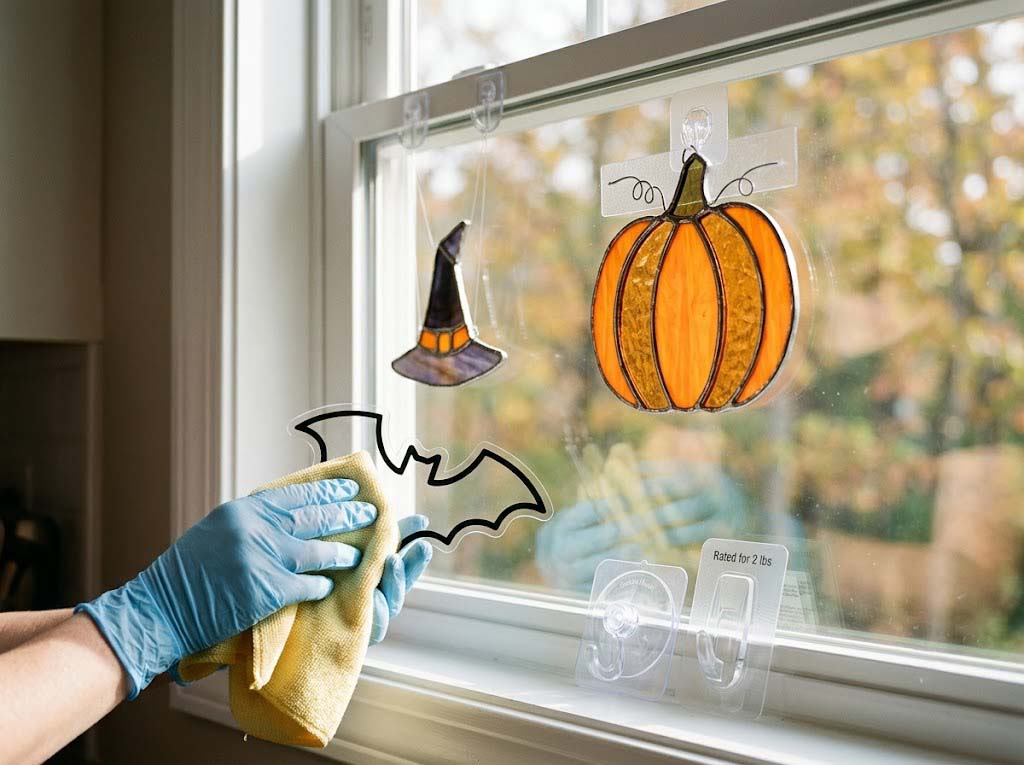
Suction cups rely on an airtight seal, and that seal weakens as temperatures drop — which is exactly when Halloween decor tends to go up. Cleaning the glass thoroughly with rubbing alcohol before applying the suction cup, and using an adhesive hook or curtain rod instead for anything on the heavier side, generally holds up more reliably through a full season than relying on suction alone.
Keeping the setup safe around kids and pets
A suncatcher hung low enough to be within reach of a curious child or a cat that likes window perches is worth reconsidering the placement for, regardless of how securely it’s mounted. Keeping fragile pieces higher on the window, away from where hands or paws naturally land, reduces the risk substantially on its own.
Cleaning glass and acrylic without damaging them
Standard glass cleaners like Windex contain ammonia, which can dull and corrode the metal seams on genuine stained glass over time — a soft, slightly damp microfiber cloth is a safer routine option. Acrylic scratches far more easily than glass, so a dry paper towel or rough cloth is one of the more common ways people accidentally dull the surface; a soft cloth with a little water, or a dedicated plastic polish for existing scratches, works better.
Styling Suncatchers With the Rest of Your Halloween Decor
Coordinate with other window and porch decor
A suncatcher tends to look more intentional when it echoes a color or motif used elsewhere in the room or on the porch, rather than standing alone as an unrelated accent. Repeating a palette — deep purple and black for a gothic theme, or orange and cream for a softer look — helps tie a window display together without needing to match every piece exactly.
Layering with curtains and other window treatments
Hanging a suncatcher in front of a sheer curtain rather than bare glass can actually soften and diffuse the light in a way that makes the color effect more even, rather than one small hot spot of bright color. It’s worth testing this placement before committing to a permanent hook, since the effect can vary a fair amount depending on the fabric.
Extending the theme beyond the window
Once your window decor is in place, it’s worth thinking through the rest of your seasonal plans — including costume ideas if you haven’t settled on one yet, since the same gothic or witchy palette from your suncatcher can carry over into an outfit choice. If you’re curious how real vintage glass pieces compare to newer acrylic designs, our vintage halloween suncatchers guide goes deeper into that history and value question.
Frequently Asked Questions
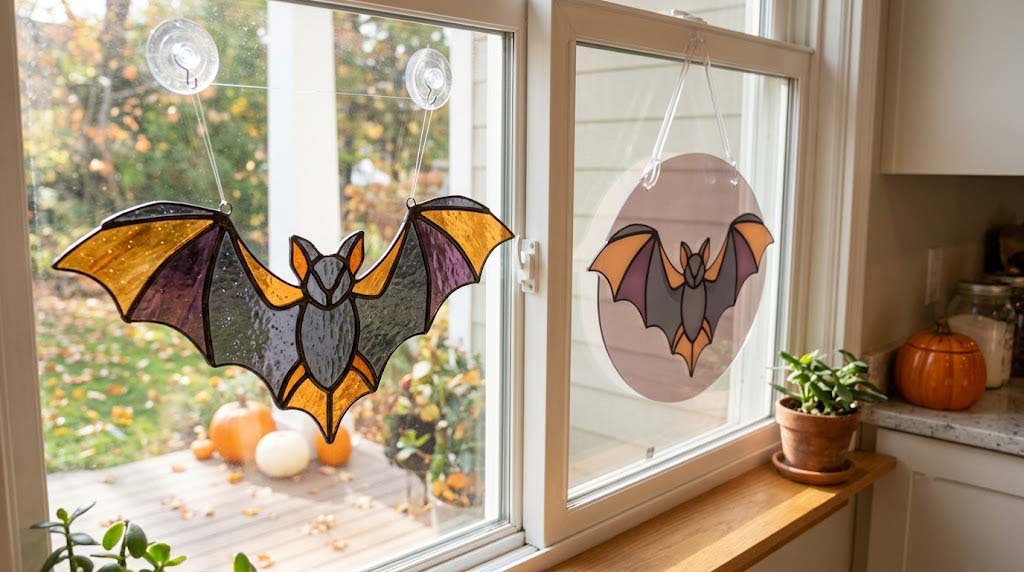
How do I stop a suncatcher from spinning or twisting constantly in a drafty window?
A single-point hanging loop lets a suncatcher rotate freely with any air movement, which is more noticeable near a drafty window or an air vent. Using two hanging points instead of one, spaced a few inches apart, restricts that rotation significantly without needing anything more than a second hook.
Is it normal for a stained glass suncatcher to have small air bubbles or slight color variation?
Yes — genuine stained glass is manufactured in individual sheets, and minor bubbles, streaks, or slight color variation between sheets are a normal characteristic of the material rather than a defect. A perfectly uniform, bubble-free appearance is actually more common in printed acrylic than in real glass.
Will hanging a suncatcher damage a rental window or void a lease agreement?
A suction cup or a temporary adhesive hook rated for removal generally doesn’t cause lasting damage to the glass or frame when removed carefully, but it’s worth checking your specific lease terms if you’re unsure. Avoiding anything that requires drilling or a permanent fixture is the safer route in a rental regardless of the suncatcher’s design.
Can I hang a Halloween suncatcher on a window with tinted or UV-filtering glass?
You can, though the color effect will generally look more muted than on clear glass, since tinted or UV-filtering coatings are specifically designed to reduce the amount of light passing through. It’s still a fine option if a fully vivid light effect isn’t the main priority.
What’s a good alternative if my suncatcher doesn’t come with a hanging loop or chain?
A short length of fishing line or thin jewelry wire threaded through an existing hole in the piece works well as a simple, nearly invisible hanging option. It’s worth choosing a strength rated well above the suncatcher’s actual weight, especially for anything made of genuine glass.
Will a genuine stained glass suncatcher fade in direct sunlight over time?
Genuine stained glass holds its color far better over time than printed acrylic, since the color is embedded in the glass itself rather than sitting on the surface as a print. Printed acrylic pieces left in strong, south- or west-facing sun for a full season are more likely to show noticeable fading.