
No products in the cart.

Halloween Gifts
Vintage Halloween Suncatchers Buying Guide: Are They Real Glass and Worth Buying?
26
Aug
Aug
Retro and gothic window decor has a real appeal heading into fall, and vintage halloween suncatchers show up constantly in that search. The catch is that “vintage” in a listing title is often a style description, not a claim about the product’s actual age or origin. Before paying a premium for something labeled vintage, it helps to know what you’re actually looking at — material, construction, light effect, size and weight, safety, price, and the seller’s return policy all matter more than the word itself.
This guide walks through how to tell real glass from acrylic, resin, or printed plastic, what to check before checkout, and where a suncatcher fits into a broader Halloween window decor ideas plan for your space.
Quick Verdict
- Best for: seasonal window accents, retro or gothic interiors, renters who want decor without floor space, and gift shopping.
- Less suitable for: windy windows, spaces where kids or pets can reach the hanging piece, or anyone who actually needs privacy coverage.
- Bottom line: worth buying when the listing is transparent about material, dimensions, hardware, and return policy — not simply because the title says “vintage.”
Unless a product is independently tested or backed by manufacturer specifications, treat listing photos and seller claims as evidence to verify rather than proof on their own. The checklist below is built around that distinction.
Vintage Halloween Suncatchers: What Are You Actually Buying?
Vintage-Inspired vs. Genuinely Vintage
Many products marketed as “vintage Halloween suncatchers” use “vintage” as a style descriptor rather than a verified statement about age or origin. A vintage-inspired suncatcher is a newly made piece designed to echo older colors, motifs, or line work — nothing about that makes it inauthentic, but it also isn’t an aged object. A genuinely vintage piece is simply old; that alone doesn’t guarantee collectible value. Antique or collectible status is a separate claim that requires evidence of age, maker, and provenance.
Words like “retro,” “vintage look,” or “stained-glass style” describe an aesthetic, not an origin. If you’re specifically hunting for an authentic vintage piece, look for a maker’s mark if present, clear photos of the back and edges, a description of the item’s condition, and any provenance information the seller can provide. A listing that can’t answer those points doesn’t provide enough evidence to treat the piece as authenticated vintage — it may simply mean the seller has limited information, not that the item is misrepresented.
What Buyers Can Realistically Expect From Light and Color
A suncatcher works best with natural light passing through it, and clear glass, colored glass, acrylic, and resin all transmit light differently in ways a studio photo won’t fully show. Deep colors such as black, purple, or dark red may appear darker or less translucent in low light, depending on the material, thickness, and finish — and a suncatcher doesn’t glow on its own after dark or substitute for a curtain once the sun goes down.
How to Tell Real Glass From Acrylic, Resin, and Printed Plastic
Real Glass and Stained-Glass Construction
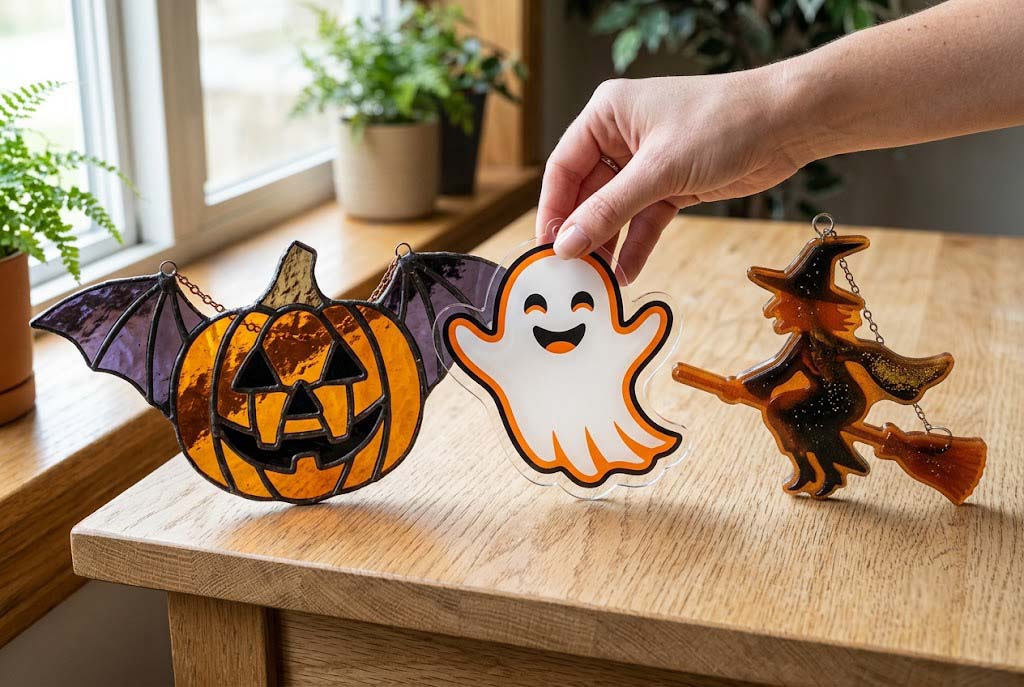
Start with the material specification in the listing rather than the photos. Genuine glass pieces often show certain supporting signs — visible thickness, a heavier feel relative to size, distinct edges, and texture — but photos alone aren’t conclusive proof of any of that. Real glass also doesn’t automatically mean traditional stained glass: some pieces are single panes with printed, painted, or surface-applied designs, while others are genuinely assembled from cut, colored sections joined with lead came or copper foil. Stained glass describes a construction technique, not a synonym for every glass decoration.
Acrylic, PVC, Resin, and Faux-Glass Designs
Acrylic is generally lighter and less likely to shatter than glass, while resin performance varies by formulation and construction. Both can still scratch, crack, or degrade under heat or weather exposure the material isn’t rated for. None of this makes an alternative material inherently inferior — it comes down to price point, intended use, and safety needs. A lightweight acrylic piece can be the more sensible choice for a rental, a high-traffic window, or a household with young kids or pets.
How to Verify the Material From a Product Listing
When evidence conflicts, weight it in this order: manufacturer specifications first, then the seller’s own material and dimension details, then close-up product photos, then verified buyer photos or reviews, then buyer Q&A — appearance alone is the weakest signal. Check whether the listing names an actual material or uses vague phrasing like “glass-style,” whether dimensions and thickness are included, and whether photos show the back and edges rather than only a front-facing shot.
The Buying Checklist: Quality, Light, Hardware, and Durability
Reading Light Transmission and Finish in Photos
Natural-daylight photos are more useful than studio shots for estimating how a piece may look in a window, though they still can’t guarantee the exact effect in your home. Compare areas that look genuinely translucent with areas where color is only surface-printed — a printed design can still transmit some light if the underlying material is clear, but it behaves differently from colored or textured glass.
Construction, Finish, and Buyer Reviews
Check whether edges look finished and safe to handle, and whether the listing describes how the piece is built — foil, solder, paint, resin coating, or a printed finish. Beyond the seller’s own photos, buyer reviews are worth scanning for real-window photos, comments on actual size or weight, reports of items arriving broken, colors that didn’t match the listing, or coating that peeled or scratched.
Hardware and Overall Hanging Length
Confirm the chain or loop looks proportionate to the piece’s weight, and check whether hanging hardware is included or sold separately. Note the overall hanging length — decor plus chain or cord — rather than just the panel size, since that’s what determines fit in a smaller window or rental. Don’t guess at load capacity from a photo; check any hook or suction cup’s stated weight rating against the piece’s listed weight, if available.
| Criteria | What to Check | Good Sign |
|---|---|---|
| Material | Glass, acrylic, resin, PVC, or plastic | Specific description that matches the photos |
| Construction | Printed, cast, assembled, or surface-coated | Close-up photos of edges and back |
| Light effect | Clarity, opacity, dark colors, shadow cast | Photos shown in natural daylight |
| Size and weight | Panel size, hanging length, listed weight | Full specs, not just a scale reference in a photo |
| Hardware | Loop, chain, hook, or suction cup | Clearly described and rated for the piece’s weight |
| Durability | Fading, scratching, breakage, weather exposure | Care instructions included |
| Value | Price, shipping, return policy | Costs and risks stated upfront |
Choosing the Right Design for Your Decor Style
Gothic and Victorian Designs
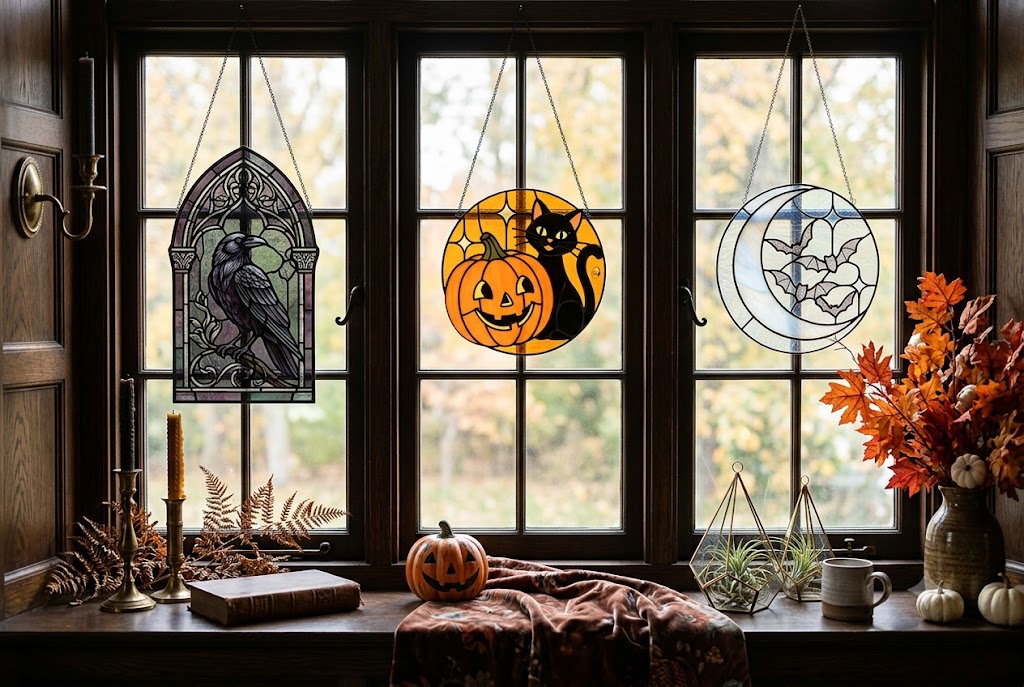
Dark palettes, ornate framing, and motifs like ravens, skulls, and cathedral-style arches suit gothic, Victorian, or dark academia interiors, and tend to read well against wood or dark metal fixtures. If you’re specifically drawn to skull, haunted-house, or overtly scary motifs, a dedicated roundup of spooky suncatcher designs covers that category in more depth than this guide does.
Retro Pumpkin, Black Cat, Witch, and Ghost Designs
These friendlier, more traditional motifs suit classic Halloween decorating, farmhouse interiors, or a more playful seasonal look. They can look retro without being genuinely vintage — check the listing’s material and provenance claims separately rather than assuming a retro palette confirms age.
Motifs That Can Work Beyond Halloween
Moon, black cat, bat, raven, celestial, and botanical motifs tend to transition into general fall or year-round decor more easily than a pumpkin, ghost, or “Happy Halloween” text design. That said, this depends on color, size, and how the piece fits the rest of the room — it’s not a guarantee that every design will feel appropriate outside of October.
Choosing the Right Size and Window Placement
Why Weight Matters as Much as Dimensions
A large piece isn’t necessarily heavy if it’s made from acrylic, and a smaller piece in real glass can still need a sturdier mounting point than expected. Check the panel dimensions, hanging length, and listed weight together, rather than choosing hardware based on how large the piece looks in a photo.
Matching Light Exposure to the Location
Direct sun creates the strongest light-transmission effect, but depending on the piece, prolonged sun exposure can affect paint, printed designs, resin, or foil over time. Indirect light is gentler and tends to suit darker colors or a subtler effect. A covered outdoor spot can work only when the manufacturer confirms outdoor use — and that confirmation needs to account for coating and finish, humidity and rain, UV exposure, freezing temperatures, and local wind conditions, not just the mounting hardware.
Privacy and Indoor vs. Outdoor Defaults
Indoors is the safest default placement, and open porches exposed to rain, strong wind, or temperature extremes are riskier without manufacturer confirmation. A suncatcher is decor, not a privacy solution — if you need to block sightlines into a room, pair it with a sheer curtain or privacy film rather than relying on the suncatcher alone.
How to Hang, Clean, and Store a Glass Suncatcher Safely
Choosing the Right Hook, Rod, or Suction Cup
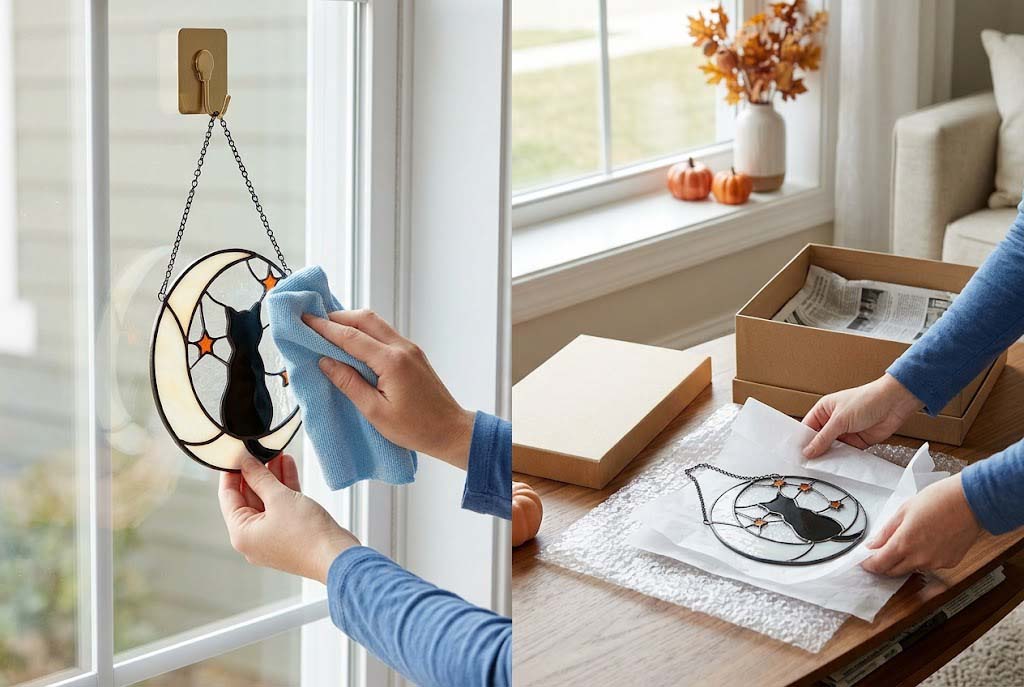
Pick a hanging point based on the piece’s listed weight, not its apparent size. Follow the suction cup’s own load and temperature guidance rather than assuming one rating applies across all products and surfaces — heat and cold both affect adhesion over time. For heavier glass pieces, a fixed hanging point is generally the safer choice, checked periodically rather than assumed to hold indefinitely.
Keeping It Safe Around Kids, Pets, and Wind
Hang any suncatcher out of reach of children and pets, and avoid loose chains or cords in areas where either could pull on them. After strong wind, an accidental bump, or opening and closing the window, check that the piece and its hardware are still secure. If you notice a crack, a chip, a sharp edge, or loose hardware, stop using that piece until it’s repaired or replaced.
Cleaning and Storing It After Halloween
Clean gently with a soft microfiber cloth and a mild solution suited to the piece’s finish — avoid scrubbing paint, printed designs, foil, or resin coatings, and skip soaking or harsh chemicals unless the manufacturer specifically allows it. When the season ends, dry the piece fully, remove hardware if needed, and wrap each item individually with cushioning material rather than stacking pieces against each other. Avoid placing anything heavy on top of glass in storage, and note the hanging length and mounting location for easier setup next year.
Is the Price Worth It? Shipping, Breakage, and Long-Term Value
What Actually Drives the Price
Material, size, design complexity, labor, finish, hardware, and brand all factor into price. A genuinely vintage or antique item can carry added value tied to provenance and condition, but the word alone doesn’t justify a higher price without something verifiable behind it.
Handmade vs. Mass-Produced Value
Handmade pieces may show small variations in finish or alignment, while mass-produced pieces are often more consistent and lighter in price. Neither construction method guarantees better quality on its own — it comes down to inspecting the actual materials, finish, and seller evidence rather than assuming handmade is automatically the better buy.
Shipping, Breakage, and Made-to-Order Risk
Before completing a purchase, check whether the item ships with individual protective packaging, whether the seller takes responsibility for items that arrive broken, and how long you have to report damage. If the piece is made to order, factor in production time, the possibility that color or detail may vary slightly from the listing photo, any cancellation window, and the fact that personalized items are often more limited when it comes to returns. Also confirm the estimated delivery window realistically gets the piece to you before Halloween.
Final Verdict: 5 Checks Before Checkout
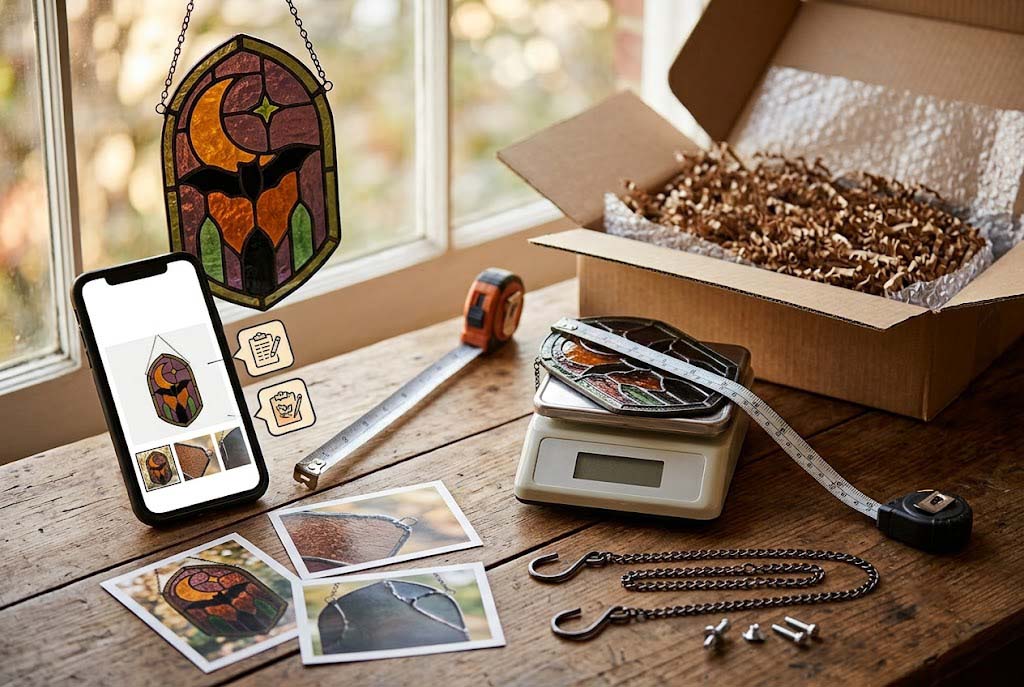
Who Should Buy One
This category suits anyone who wants a seasonal window accent, leans toward retro or gothic decor, and has a stable mounting point with reasonable light exposure. It also works well for shoppers comfortable with the fact that glass requires some care and occasional inspection.
Who Should Consider a Different Kind of Decor
If you actually need privacy coverage, have a mounting point prone to getting bumped or pulled, want something very lightweight or impact-resistant, or aren’t comfortable with breakage risk and shipping costs, a different type of window decor may serve you better.
The Five Checks Before Checkout
- Material: Is glass, acrylic, resin, or plastic clearly stated?
- Size and weight: Are panel dimensions, hanging length, and listed weight all included?
- Hardware: Is the hanging point rated for the piece’s weight and your window setup?
- Real photos: Are there photos of the back, edges, and the piece in natural light?
- Shipping and returns: Are breakage, exchange, and delivery timing policies clearly stated?
Vintage Halloween suncatchers are worth buying when the product description is transparent and the material, mounting method, lighting conditions, and return risk match your space. The word “vintage” alone is not enough to justify a higher price — the specifics behind it are what actually determine value.
See more: Ultimate Guide 2026: how many days is it halloween & Ideas
Frequently Asked Questions About Vintage Halloween Suncatchers
Are vintage Halloween suncatchers made of real glass?
Some are made from real glass, while others use acrylic, resin, PVC, or printed plastic. Check the material specification, dimensions, listed weight, and edge or back photos instead of relying only on the word “glass” in the title.
How can you tell if a suncatcher is glass or acrylic?
Start with the seller’s material specification and listed weight, if available. Close-up photos of the edges and back can help, but appearance alone isn’t conclusive. If the listing is unclear, ask the seller or choose a product with a clear return policy.
Can glass Halloween suncatchers be used outdoors?
Only when the manufacturer confirms outdoor use for that specific finish. Covered areas are generally less exposed than open porches, but rain, wind, UV exposure, and freezing temperatures can still affect the coating or cause breakage.
What size vintage Halloween suncatcher is best for a window?
Choose a size visible from the room without overwhelming the window, and check the overall hanging length, not just the panel size. A small window usually suits one compact piece, while a larger window can support a statement piece or a grouped display.
How do you clean and store a glass suncatcher?
Wipe it gently with a soft microfiber cloth and a mild cleaner suited to its finish. Avoid abrasive chemicals and soaking unless the maker allows it. Dry it fully, wrap it individually, and store it away from heavier items.
Can a vintage Halloween suncatcher be used after Halloween?
Yes, if the motif and color palette suit year-round decor. Moon, black cat, bat, raven, celestial, and botanical designs generally transition more easily than overt pumpkin, ghost, or “Happy Halloween” designs.