
No products in the cart.

Halloween Gifts
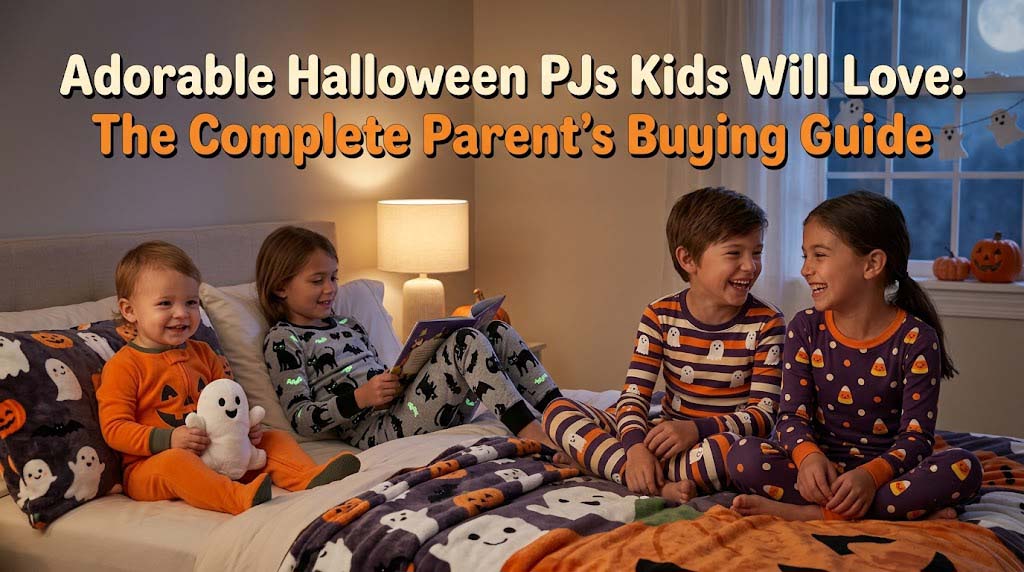
Adorable Halloween PJs Kids Will Love: The Complete Parent’s Buying Guide
04
Sep
Sep
Finding halloween pjs kids genuinely want to wear — and keep wearing well past October 31 — comes down to more than picking the cutest print in the store. Comfort, safety, and fit matter just as much as the pumpkin or bat design on the front, especially since sleepwear sits closer to safety regulations than most other kids’ clothing categories. This guide covers the styles that tend to work best by age, then walks through everything a parent actually needs to check before buying, from federal flammability rules to sensory-friendly details. If you’re planning ahead for a Halloween pajama day at school or a family movie night, tracking how many days is it halloween can help you order early enough to avoid shipping delays on popular prints.
Why Kids Love Halloween Pajamas (And Parents Do, Too)
Sleepwear vs. Costumes: The Comfort Factor
Pajamas let kids enjoy the fun of Halloween without the itch, restriction, or overheating that often comes with a full costume. A costume is built to look a certain way for a few hours; sleepwear is built to feel comfortable for an entire night, which means soft fabric, room to move, and none of the rigid pieces — plastic masks, capes, wings, or belts — that make a costume fun to wear but a bad idea in bed.
What Makes a Halloween PJ Set Actually Work at Bedtime
Beyond the print, the details that matter most are the ones kids notice immediately: soft, breathable fabric against the skin, a fit that doesn’t bunch up or ride during sleep, and nothing rigid or decorative sewn on that could dig in overnight. A set that looks adorable in a product photo but skips these basics tends to end up back in the drawer after one uncomfortable night.
Top Adorable Halloween PJ Styles by Age and Personality
Cute and Not Scary: Pumpkins and Friendly Ghosts for Toddlers
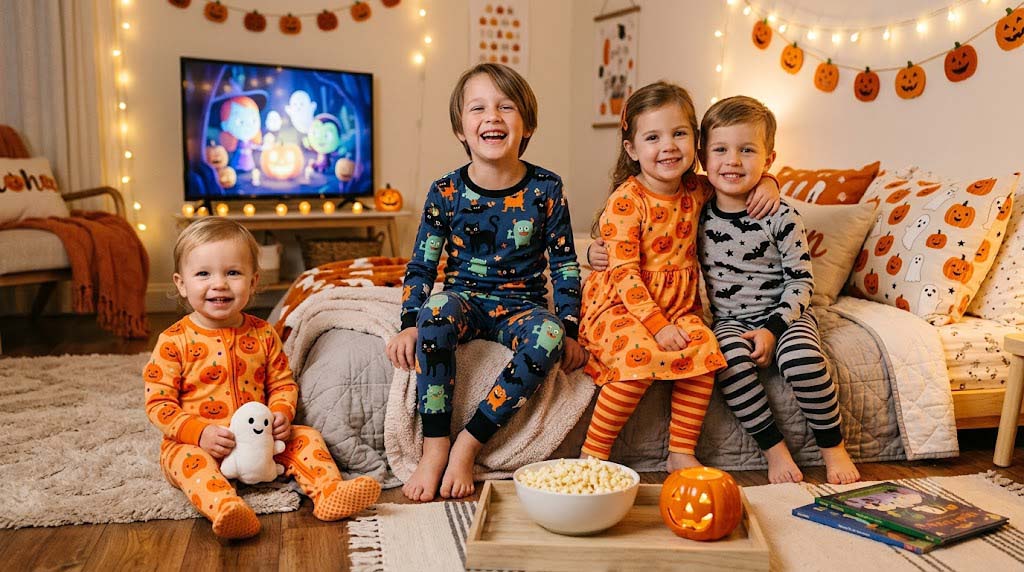
For toddlers, bright colors, smiling pumpkin faces, and friendly ghost prints tend to land better than anything genuinely spooky. Footed pajamas with a two-way zipper are worth looking for at this age specifically, since a zipper that opens from the bottom makes middle-of-the-night diaper changes far easier without needing to fully undress a sleepy toddler.
Playful and Spooky: Bats, Black Cats, and Monsters for School-Age Kids
Older kids generally gravitate toward two-piece sets with a bit more personality — bats, black cats, friendly monsters, or the occasional glow-in-the-dark print that shows up once the lights go off. This is usually the age range where kids start caring about the design as much as parents care about the fit, so it’s worth letting them pick the print while you handle the safety and sizing checks in the background.
Picture-Perfect: Matching Sibling and Family Sets
Matching doesn’t have to mean identical — coordinating on a color palette or a shared theme (one sibling in a pumpkin print, another in a bat print from the same color family) usually photographs just as well as fully matching sets and gives each kid a design they actually like. If you’re building out a full Halloween wardrobe rather than just pajamas, browsing the wider halloween collection can help you coordinate sleepwear with daytime outfits or family photos.
The Parent’s Buying Guide: Safety, Fabric, and Fit
CPSC Safety Rules: Snug-Fit vs. Flame-Resistant, and Why Sizing Matters
This is the detail that matters most and gets skipped most often. Under U.S. federal safety standards (16 CFR 1615 and 1616), children’s sleepwear in sizes above 9 months up to size 14 must be either flame-resistant or snug-fitting — infant sizes 9 months and under are exempt, since infants aren’t mobile enough to be near open flames. Snug-fitting sleepwear, usually made from cotton or a cotton blend, is designed to fit closely to the body; loose-fitting cotton sleepwear that isn’t flame-resistant is exactly the kind of garment the standard exists to steer parents away from, since a gap of air between fabric and skin lets a flame spread faster. Snug-fitting garments carry a yellow hangtag noting the fit requirement, so it’s worth actually reading that tag rather than assuming any cotton pajama set is automatically compliant. This is also why sizing up “for room to grow” defeats the purpose with snug-fit sleepwear — an oversized fit isn’t just a comfort issue here, it’s a safety one. Measuring chest, waist, and height against the brand’s actual size chart, rather than shopping by age alone, is the more reliable way to land on the right size.
Choosing the Right Fabric for Your Climate
Cotton and bamboo blends tend to be the most breathable options, which works well in warmer climates or bedrooms with the heat or AC running most of the night. Microfleece adds real warmth for colder regions, but it comes with its own trade-off: fleece plus a heavy comforter is a common recipe for a child waking up overheated and sweaty in the middle of the night, so it’s worth adjusting bedding rather than layering fleece pajamas under a thick blanket.
Sensory-Friendly Details for Picky Sleepers
For kids who are sensitive to texture — whether or not that sensitivity has a formal diagnosis — small construction details make a real difference. Tagless printing (where care instructions are printed directly on the fabric instead of sewn in as a scratchy tag), flat or flatlock seams instead of raised ones, and a soft elastic waistband all reduce the small irritations that can turn into a bedtime battle. These details are usually listed in the product description, so it’s worth checking for them specifically rather than assuming any soft-looking fabric will feel the same against skin overnight.
Care and Styling: Making the Most of Halloween PJs
Wash-Care Tips to Keep Colors and Prints Looking Fresh
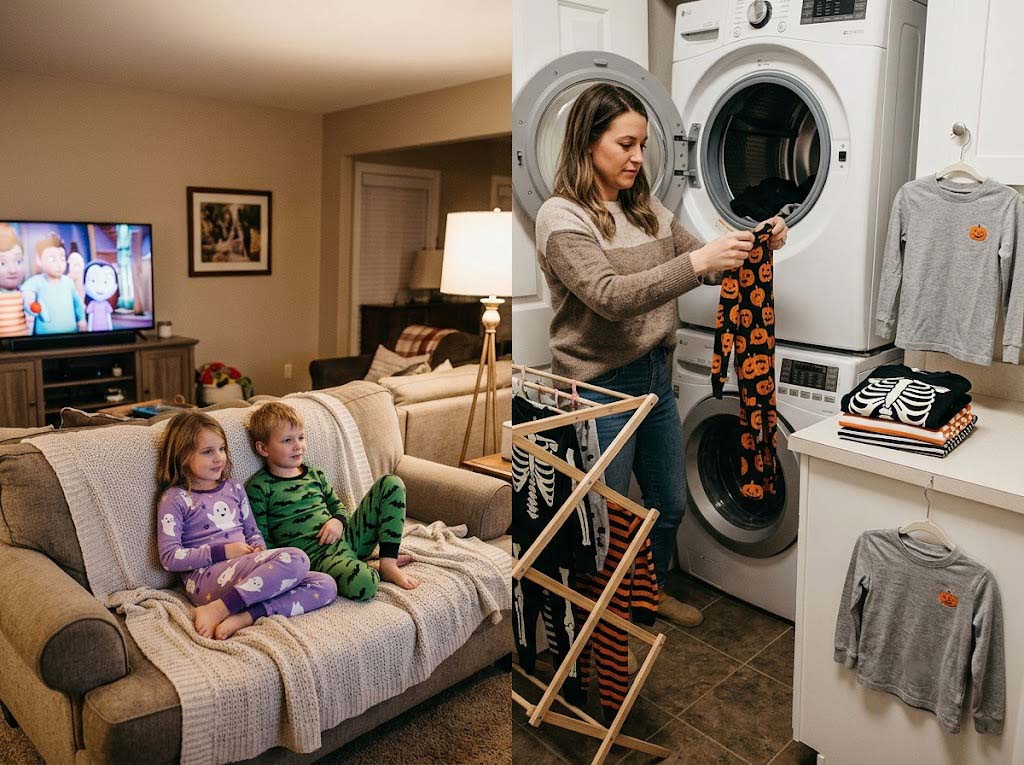
Printed and glow-in-the-dark designs generally hold up longer when washed inside out on a cold cycle, since this reduces direct friction on the printed surface. Low heat in the dryer, or air drying, helps prevent the print from cracking over repeated washes and protects zippers or snaps from warping under high heat.
Wearing PJs Beyond Bedtime
Halloween pajamas get plenty of use outside of actual bedtime — family movie nights, a lazy Saturday morning, or a “Pajama Day” at school if that’s part of the calendar. If your child’s school doesn’t allow pajamas for a Halloween event, a set of kids halloween shirts makes a reasonable daytime alternative that still lets them show some Halloween spirit within a dress code.
Frequently Asked Questions About Halloween Pajamas for Kids
Can my child wear Halloween pajamas for trick-or-treating?
For toddlers riding in a stroller, a pumpkin or skeleton-print pajama set paired with a warm outer layer works fine and keeps things simple. For kids who’ll be walking and moving around a lot, keep in mind that pajamas aren’t built for the wear and tear of an evening outdoors the way a costume is.
How do I recharge a “glow-in-the-dark” pajama print that’s gotten dim?
Most glow prints need direct light exposure to “charge” — leaving the pajamas under a bright lamp, a flashlight, or direct sunlight for 15 to 30 minutes before bedtime will usually restore the glow. Over many wash cycles, the glow effect can fade permanently, which isn’t a defect so much as how the pigment works over time.
What if snug-fit pajamas feel too tight around my child’s arms or legs?
Snug-fit is a safety requirement, not just a style choice, so sizing up defeats its purpose. If the fit is genuinely uncomfortable rather than just snug, look at fabrics with more stretch, like a cotton-spandex or modal blend, or consider a flame-resistant loose-fitting style instead, which doesn’t rely on a tight fit for safety.
How many Halloween pajama sets does a kid actually need?
One or two sets is usually enough for most families, since Halloween-specific prints only get regular use for a few weeks each fall. Buying more only makes sense if your child wants to wear the pajamas well past the season for movie nights or general everyday sleepwear.
Is it safe to let my child wear a Halloween pajama costume — like a full-body dinosaur or skeleton suit — to actual bed?
Check whether the garment is labeled and sold as sleepwear rather than a costume. Costume-style sleep suits sometimes include non-flame-resistant fabric, hoods, or attached pieces that aren’t designed with the same flammability standards as sleepwear, so the safest approach is to check the label rather than assume a “costume pajama” meets the same rules as regular pajamas.
Do I need to wash new Halloween pajamas before the first wear?
Washing new sleepwear before first use is a reasonable habit generally, since it removes manufacturing residue and any lingering odor from packaging and shipping. Follow the care label for wash temperature, especially with flame-resistant fabrics, since some finishes are more sensitive to hot water or certain detergents than others.