
No products in the cart.

Easter Gift Ideas
Is Easter Day a Bank Holiday and When Is Easter Day in USA

05
Mar
Mar
Many Americans wonder whether Easter is officially recognized as a public holiday and how it affects banks, schools, and businesses. Questions such as “is easter day a bank holiday” or “when is easter day in usa” often arise each year because Easter does not occur on a fixed calendar date. Unlike national holidays such as Independence Day or Christmas, Easter moves annually according to a calculation based on the spring equinox and the lunar cycle. Because of this shifting date and its religious origins, Easter occupies a unique position in the United States holiday system. Understanding whether Easter functions as a bank holiday requires looking at federal law, banking schedules, and the broader cultural practices that shape how Americans observe the day.
Is Easter Day a Bank Holiday in the United States
In the United States, Easter Sunday is not classified as a federal bank holiday. While it is one of the most widely recognized religious celebrations in the country, it does not appear on the official list of federal holidays established by the government. This means that financial institutions, government offices, and many businesses are not legally required to close on Easter Day. However, the practical reality can still vary depending on whether banks operate on Sundays and how individual institutions choose to schedule their services during holiday weekends.
Federal Holiday Status of Easter
Federal holidays in the United States are established by Congress and apply primarily to federal government offices and employees. When a day is designated as a federal holiday, most government offices close and many banks suspend regular operations. Easter, despite its cultural significance, has never been formally included in this list. This distinction means that Easter Sunday does not carry the same official status as holidays like Memorial Day or Thanksgiving.
The absence of Easter from the federal holiday calendar reflects the country’s approach to balancing religious observance with secular governance. While millions of Americans celebrate Easter for religious reasons, the federal government does not designate it as a nationwide day off. As a result, the answer to the question is easter day a bank holiday is technically no within the federal system.
Why Banks Usually Remain Open
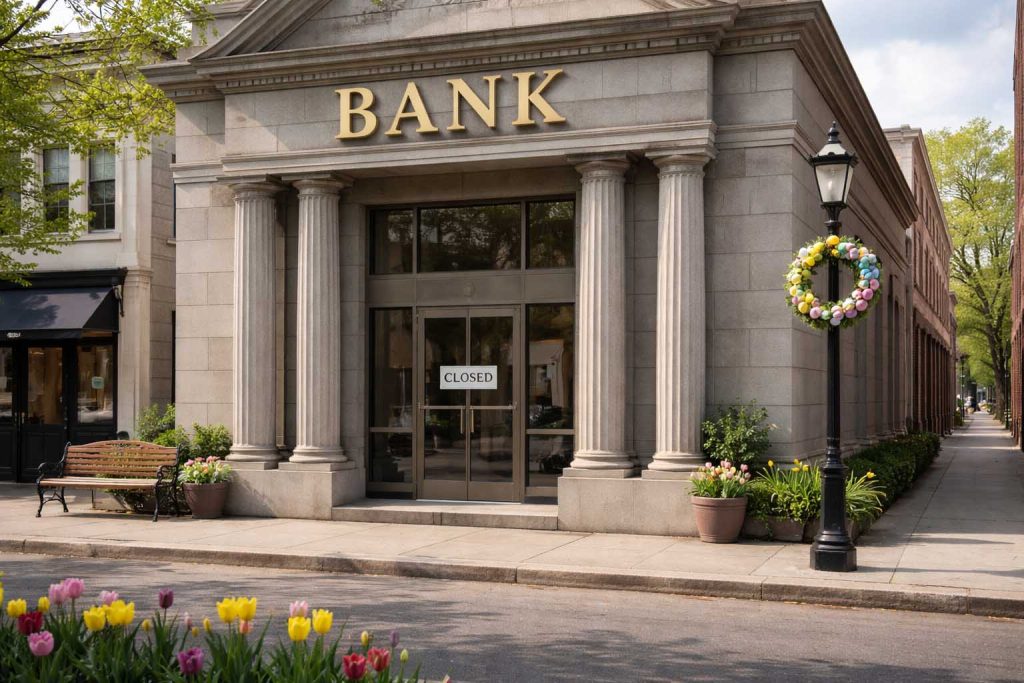
Most banks in the United States follow the Federal Reserve holiday schedule when determining which days they close for official observances. Because Easter Sunday is not listed among those federal banking holidays, financial institutions are not required to shut down operations specifically for Easter. However, many bank branches are closed on Sundays regardless of the holiday, which can create the impression that Easter is a bank holiday even though the closure is actually part of the normal weekly schedule.
In addition to traditional branch operations, modern banking services are increasingly digital. Online banking platforms, mobile applications, and ATM networks remain accessible throughout the Easter weekend. This means that even if a physical branch is closed on Sunday, customers can typically perform transactions, transfer funds, and access account information without interruption.
Why Easter Is Not a Federal Holiday in the U.S.
One of the primary reasons Easter has not been designated as a federal holiday is the constitutional principle separating church and state. Because Easter is rooted in Christian religious tradition, formally recognizing it as a national holiday could raise concerns about government endorsement of a particular religion. Instead, the United States has historically favored a more neutral approach in which religious holidays may be widely celebrated but are not necessarily incorporated into the federal holiday calendar.
The Separation of Church and State
The First Amendment to the U.S. Constitution prevents the government from establishing or favoring any particular religion. While many Americans identify with Christian traditions, the country is home to a wide range of religious beliefs and cultural backgrounds. Avoiding the designation of explicitly religious holidays as federal observances helps maintain this constitutional balance.
This principle does not prevent individuals or communities from celebrating religious holidays. Churches, families, and local organizations continue to observe Easter with services, gatherings, and cultural traditions. However, the federal government itself remains neutral, which explains why Easter does not appear on the official list of nationwide holidays.
Historical Development of Federal Holidays
Federal holidays in the United States developed gradually over time, often reflecting historical events or civic milestones rather than religious observances. Early federal holidays included celebrations such as Independence Day and Washington’s Birthday, both of which were tied to national identity and political history. Later additions to the federal calendar followed a similar pattern.
Because Easter is a religious observance rather than a national civic event, it was never incorporated into this system. Instead, Americans observe the holiday primarily through church services, family traditions, and community events. This historical background clarifies why the question is easter day a bank holiday often leads to confusion, especially for those accustomed to countries where Easter Monday is recognized as a public holiday.
When Is Easter Day in USA Each Year
Another reason people frequently ask about Easter’s holiday status is that the date changes every year. Unlike holidays that occur on a fixed day of the month, Easter follows a movable schedule determined by an astronomical rule tied to the spring equinox and the lunar cycle. This system means that Easter can fall anywhere between late March and late April, depending on the year. Because the date shifts annually, many Americans find themselves checking calendars each spring to determine exactly when Easter Day will occur.
The Astronomical Rule Behind Easter
The calculation of Easter is based on a rule established by early Christian leaders. According to this rule, Easter is celebrated on the first Sunday after the first full moon following March 21, which approximates the spring equinox. This formula ensures that Easter always falls on a Sunday while maintaining a connection to seasonal and lunar cycles.
Although the rule may appear complex, its purpose is to preserve the historical association between the resurrection narrative and the timing of the Jewish Passover, which also follows a lunar calendar. As a result, the Easter date moves each year but remains within a predictable seasonal window.
Why Americans Need to Check the Date Annually
Because Easter does not occur on a fixed date, individuals and organizations often need to confirm the exact timing each year. Churches schedule services, families plan gatherings, and businesses prepare seasonal promotions around the holiday. The changing calendar date means that these plans cannot rely on the same day each year.
This shifting schedule also influences travel plans, school breaks, and community events. Understanding when Easter falls helps people coordinate activities and ensures that celebrations align with the official observance of the holiday.
Do Banks Close on Easter Sunday
Even though Easter is not a federal banking holiday, many people still notice that bank branches are closed on Easter Sunday. This situation occurs primarily because Sunday is already a non-operational day for most physical bank branches. In other words, the closure is related to normal weekend schedules rather than to the holiday itself. Distinguishing between these two factors is important when evaluating whether Easter functions as a bank holiday in practice.

Sunday Banking Schedules
Traditional bank branches across the United States generally operate Monday through Friday, with limited hours on Saturdays and closures on Sundays. Because Easter always falls on a Sunday, customers often encounter closed branches and assume the closure is due to the holiday. In reality, most branches would be closed regardless of whether Easter occurred on that particular weekend.
This overlap between the Easter date and typical Sunday closures contributes to the widespread belief that Easter is treated as a bank holiday. However, the underlying reason remains the regular weekly schedule rather than a federally mandated holiday closure.
Online Banking During Easter Weekend
Modern banking systems provide customers with continuous access to financial services even when physical branches are closed. Mobile apps, online banking platforms, and ATM networks allow users to check balances, transfer funds, and perform many other transactions throughout the Easter weekend.
Because these digital systems operate independently of branch hours, banking activity rarely stops completely. This availability reflects the broader shift toward digital financial services and helps ensure that customers can manage their accounts regardless of traditional holiday schedules.
Are Businesses Closed on Easter Day
Even though Easter Sunday is not a federal holiday in the United States, many businesses still adjust their schedules to accommodate the cultural significance of the day. Retailers, restaurants, and entertainment venues may choose to close, shorten operating hours, or remain fully open depending on their industry and local demand. These decisions are usually based on customer behavior rather than legal requirements, which is why the business landscape during Easter can vary significantly from one region to another.
Retail Store Policies on Easter Sunday
Large retail chains often evaluate whether opening on Easter Sunday aligns with their brand image and customer expectations. Some major retailers close their doors entirely to allow employees to spend time with family, while others operate with limited hours to serve customers who are shopping for last-minute holiday items. This mix of approaches contributes to the perception that Easter operates similarly to a national holiday even though it does not carry official government status.
Regional culture also plays a role in determining store hours. In communities where church attendance and family gatherings are particularly important, businesses may see reduced demand during Easter morning and choose to open later in the day. In other areas with a strong tourism or restaurant industry, establishments may remain open throughout the day to accommodate visitors and holiday dining.
Restaurants and Hospitality Services
Restaurants, cafes, and hospitality venues often experience increased demand on Easter Sunday, especially during brunch and afternoon dining hours. Many families treat Easter as a special occasion that includes a shared meal, which leads to popular traditions such as Easter brunch buffets or family-style holiday dinners. Because of this demand, restaurants are among the businesses most likely to remain open during the holiday.
Hotels and travel-related services also remain operational throughout the Easter weekend. Since the holiday frequently falls during spring travel season, many people take advantage of the extended weekend to visit family or enjoy short vacations. As a result, hospitality businesses often experience steady activity rather than a slowdown during the Easter period.
Do Schools Close for Easter in the United States
Public schools in the United States do not universally close for Easter itself, but many school districts schedule spring break around the same time. Because Easter falls in early spring, the timing naturally overlaps with the traditional academic break that occurs in March or April. This scheduling approach allows families to travel or celebrate the holiday without requiring schools to formally designate Easter as a religious holiday closure.
Spring Break Timing Around Easter
Many school districts intentionally place spring break during the weeks surrounding Easter to accommodate family traditions and travel plans. This practice does not officially label the break as an Easter holiday, but the overlap often provides students and teachers with time off that coincides with the religious observance. As a result, families are able to attend church services or host gatherings without worrying about school schedules.
Because the date of Easter changes each year, school administrators must adjust the academic calendar accordingly. Some districts schedule spring break before Easter, while others plan it during the following week. This flexibility ensures that the school year remains balanced while still recognizing the cultural significance of the holiday season.
Differences Between Public and Private Schools
Private schools, particularly those affiliated with Christian institutions, may treat Easter differently from public schools. In these environments, Good Friday and Easter-related observances are more likely to appear directly in the school calendar. Religious schools often organize special services, community events, or extended breaks around the holiday.
Public schools, on the other hand, typically avoid explicitly religious designations in their calendars. Instead, they rely on the broader concept of spring break to provide time off. This approach reflects the same constitutional principle that explains why Easter is not recognized as a federal holiday in the United States.
How Easter Weekend Affects Government Offices
Government offices across the United States generally operate according to the official federal holiday calendar. Since Easter is not included in that schedule, most government agencies remain open on the Friday preceding Easter and resume normal operations on the following Monday. The Easter weekend itself typically falls during standard weekend closures, which means many public offices are closed simply because they do not operate on Saturdays or Sundays.
Federal Offices and Easter Observance
Federal agencies continue to provide services during the days leading up to Easter without any special closures. Employees follow their normal work schedules unless they personally request leave for religious observance. This system allows individuals to participate in religious celebrations while maintaining the neutrality required of federal institutions.
Because Easter always occurs on a Sunday, the holiday does not typically interrupt weekday government operations. Citizens can still access federal services such as postal offices, administrative agencies, and public offices according to their standard weekday schedules.
State and Local Government Practices
State and local governments may occasionally adjust schedules around the Easter weekend, particularly in communities with strong religious traditions. Some offices may operate with reduced hours on Good Friday or allow employees to take optional leave. These adjustments are generally administrative decisions rather than legally mandated closures.
Local community events and celebrations can also influence how public spaces are used during Easter weekend. Parks, community centers, and recreational facilities often host seasonal activities such as egg hunts, family festivals, and spring celebrations that bring residents together.
See more: What Day Is Easter in 2026? Exact Date and Why It Falls on April 5
Why Good Friday Sometimes Has a Larger Impact
While Easter Sunday itself is not a bank holiday, the Friday preceding Easter can sometimes have a greater impact on business and financial operations. Good Friday is recognized in several countries as an official public holiday, and its observance can influence international markets and religious communities within the United States. This connection occasionally leads people to assume that Easter weekend carries broader institutional closures than it actually does.
Financial Market Closures on Good Friday
Unlike most bank branches, U.S. financial markets such as the New York Stock Exchange close on Good Friday. This closure reflects long-standing financial industry traditions rather than federal law. Because the stock market shuts down for the day, investors and traders often associate the broader Easter weekend with reduced financial activity.
Even though stock markets close, traditional banks and many financial institutions continue operating on Good Friday. Customers can still perform routine transactions and access financial services during normal business hours. The contrast between financial markets and retail banking adds to the confusion surrounding Easter’s status as a bank holiday.
Religious Observance of Good Friday
Good Friday holds deep significance within Christian tradition as the day commemorating the crucifixion of Jesus. Churches across the United States hold special services, prayer gatherings, and community events to mark the occasion. For many believers, Good Friday represents a solemn moment of reflection that leads into the celebration of Easter Sunday.
These religious observances may influence individual work schedules as people choose to attend church services or take personal leave. However, the impact typically remains at the personal or community level rather than affecting national institutions or banking operations.
Planning Ahead Once You Know When Easter Day Is
Because Easter does not occur on the same date every year, planning ahead becomes especially important for families, businesses, and travelers. Knowing when Easter Day occurs in the United States helps individuals organize events, prepare holiday meals, and coordinate travel schedules. The changing date also influences seasonal retail trends and community celebrations that often take place throughout the spring season.
Travel and Event Planning
Many Americans take advantage of the Easter weekend as an opportunity for family visits or short vacations. Spring weather, school breaks, and the festive atmosphere surrounding the holiday make it a popular time for travel. As a result, transportation services, hotels, and tourist destinations often experience increased demand during this period.
Event organizers also rely on the Easter calendar when scheduling festivals, church gatherings, and community activities. Easter egg hunts, spring fairs, and seasonal markets frequently take place during the weeks leading up to the holiday, making early planning essential for successful events.
Seasonal Shopping and Preparation
Retail businesses often begin preparing for Easter weeks in advance by stocking seasonal decorations, gifts, and specialty foods. From chocolate eggs to spring-themed decorations, the holiday creates a noticeable shift in consumer behavior. Understanding when Easter occurs allows both shoppers and retailers to plan purchases and promotions effectively.
Families also use this time to organize gatherings and traditions that bring relatives together. Whether hosting a brunch, attending church services, or arranging outdoor celebrations, knowing the exact Easter date ensures that preparations run smoothly.
FAQ About Easter Day and Bank Holidays
Is easter day a bank holiday in the united states
Easter Day is not an official federal bank holiday in the United States. Banks generally follow the Federal Reserve holiday schedule, which does not include Easter. As a result, banking institutions are not required to close specifically because of the holiday.
However, since Easter always falls on a Sunday and most bank branches are closed on Sundays, customers may still find physical branches unavailable. Digital banking services remain accessible, allowing transactions and account access throughout the holiday weekend.
When is easter day in usa
Easter Day in the United States occurs on the first Sunday after the first full moon following the spring equinox. This calculation means the holiday can fall between March 22 and April 25 depending on the year. Because the date shifts annually, people often check the calendar to confirm the exact timing each spring.
The changing date is one reason many Americans search for the answer to when is easter day in usa each year. Churches, schools, and families rely on this information to plan services, gatherings, and seasonal celebrations.
Do banks close on easter sunday
Most bank branches are closed on Easter Sunday, but the closure usually occurs because Sunday is a normal non-operational day for banks. The closure is not specifically related to Easter’s status as a holiday.
Even when branches are closed, online banking platforms, ATMs, and mobile applications continue operating. Customers can still manage accounts, transfer funds, and perform many financial tasks throughout the Easter weekend.
Is good friday a bank holiday
Good Friday is not a federal banking holiday in the United States, although financial markets such as the New York Stock Exchange close for the day. This difference sometimes causes confusion because people assume banks follow the same schedule as stock markets.
In practice, most banks remain open on Good Friday and continue operating according to normal weekday hours. Customers can still access banking services unless a specific branch chooses to adjust its schedule locally.